
Choosing the Right Hardware Partner for the Matte Finish Era: A Practical Matrix for Hotel and Residential Developers
Reading time: 6–8 minutes
Quick Slides:
Slide 1 – The New Risk:
Matte black and advanced finishes look stunning in renderings, but they expose every weakness in hardware processing, plating, and quality control.Slide 2 – The Supplier Matrix:
Not all shower enclosure suppliers are equal: assembly-only, hardware + outsourced plating, and hardware + in-house plating each carry very different levels of finish risk.Slide 3 – What Really Matters:
Four capabilities decide whether your project performs as designed: design collaboration, process & plating control, testing & traceability, and project coordination.Slide 4 – The Safest Bet for Hotels & Apartments:
For high-spec bathrooms, the most reliable path is partnering with manufacturers that combine in-house hardware processing with in-house electroplating and coating lines.
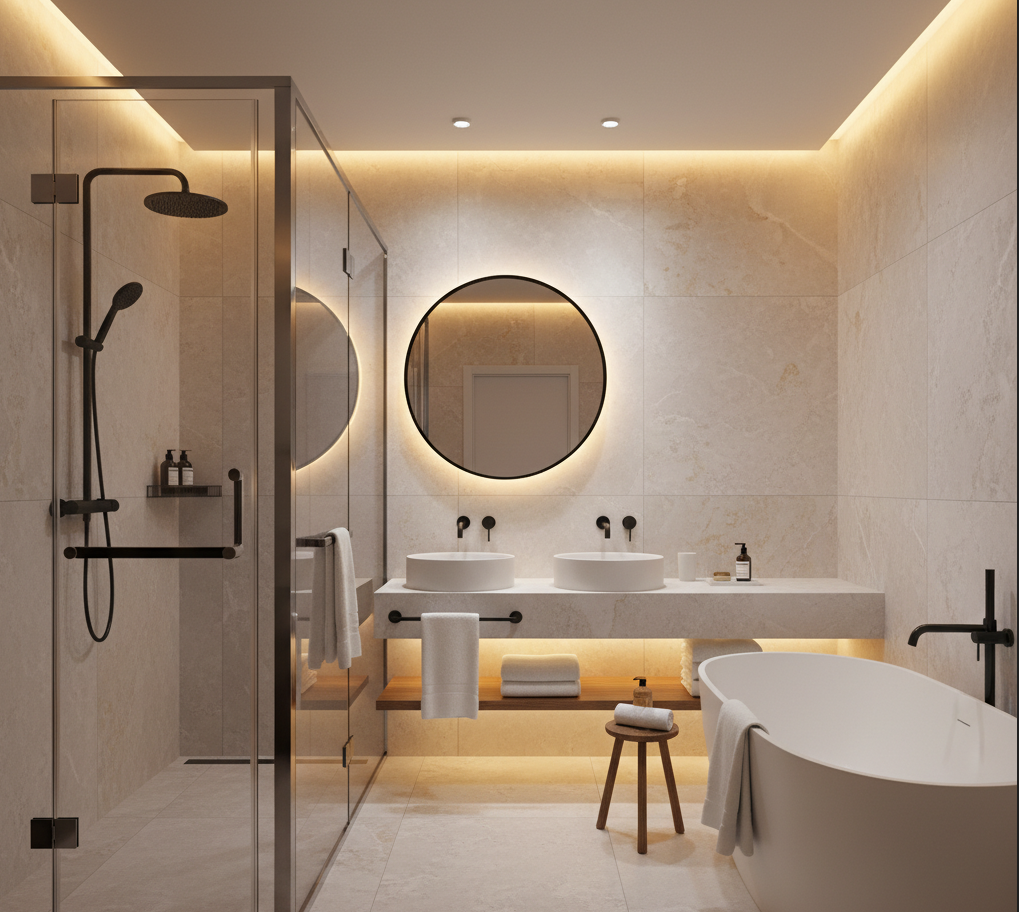
For hotel and residential developers, bathroom hardware used to be a relatively “safe” category: standard chrome, known suppliers, predictable outcomes. The rise of matt black, brushed finishes, and specialized plating has quietly changed that. Suddenly, finish quality, consistency across batches, and long-term performance are much harder to get right.
In this new environment, the question is no longer just “Who is the cheapest?” but “Which supplier can actually control the process end-to-end and protect my project’s reputation?”
Why Matte and Advanced Finishes Raise the Bar
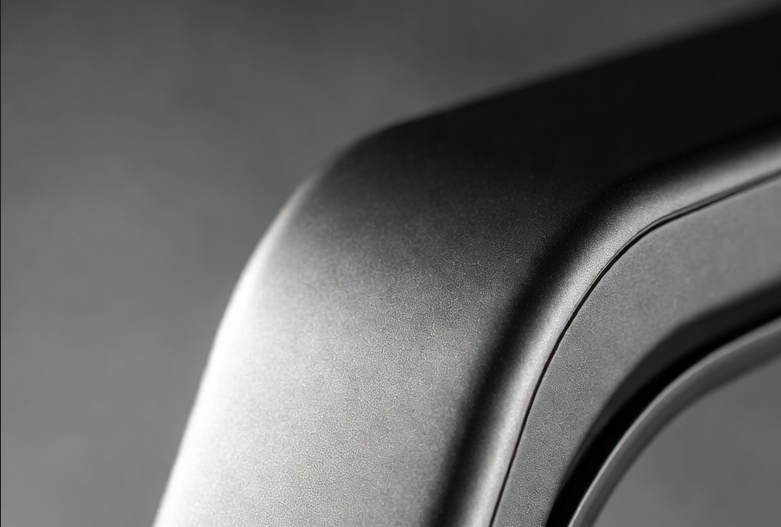
Matte black, brushed nickel, and premium chrome on aluminum profiles look simple in the renderings, but they are unforgiving in reality. Any color shift, orange peel, pinholes, or adhesion issues show up immediately on large shower doors and high-contrast bathrooms. For hotel rooms and branded residences, that can be the difference between “design-forward” and “value engineered.”
This is why the type of supplier you work with matters as much as the specified finish itself. Not every factory that can assemble a shower enclosure is equipped to deliver stable, repeatable, high-end surface finishes at scale.
1. Assembly-Only Supplier (No In-House Plating)

Strengths:
Often competitive on unit cost and lead times for simple, standard chrome products.
Suitable for low-risk, low-variation programs where visual standards are not too strict.
Limitations in matte / black / PVD era:
Plating is fully outsourced; color, gloss level, and texture can vary by batch or even by shipment.
Root cause analysis is harder when issues appear on site (peeling, rust marks, color mismatch).
Limited ability to co-develop new finishes with designers or adjust quickly during mock-up stages.
2. Hardware Processing + Outsourced Plating
Strengths:
Better control over metal preparation, tolerances, and edges before plating.
Can support more customized hardware geometry and design-specific solutions.
Limitations:
Still depends on external plating shops for critical finish parameters (bath chemistry, process discipline, quality standards).
When different plating shops are used, it is challenging to keep finishes aligned across large, phased projects.
Response time for corrections, rework, or pilot runs can be slow.
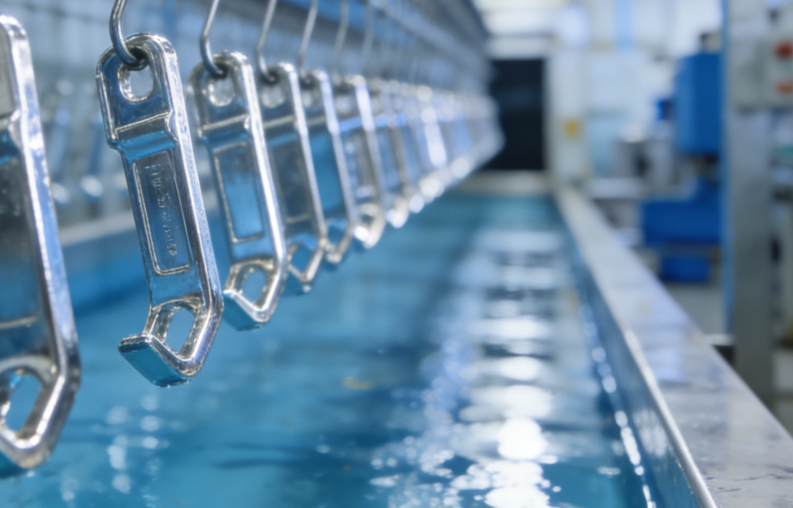
3. Hardware Processing + In-House Plating (Electroplating / PVD / Powder Coating on Aluminum and Other Metals)
Strengths:
Single point of responsibility from raw aluminum / hardware to final finish.
Direct control over pre-treatment, polishing, electroplating, PVD, and powder coating on a daily basis.
Easier to maintain color harmony, gloss levels, and texture across large programs and repeat orders.
Faster iteration when designers request adjustments during mock-ups or value-engineering rounds.
What this means for developers and procurement:
Fewer surprises between sample approval and mass production.
Shorter feedback loops when field issues or on-site constraints appear.
Better alignment with brand standards for hotel chains and serviced apartments.
If your projects are moving toward matt black, brushed, or premium chrome on aluminum, it is worth asking not only “Can you make this finish?” but “Who actually controls the plating line?”
Capability Dimensions That Really Matter
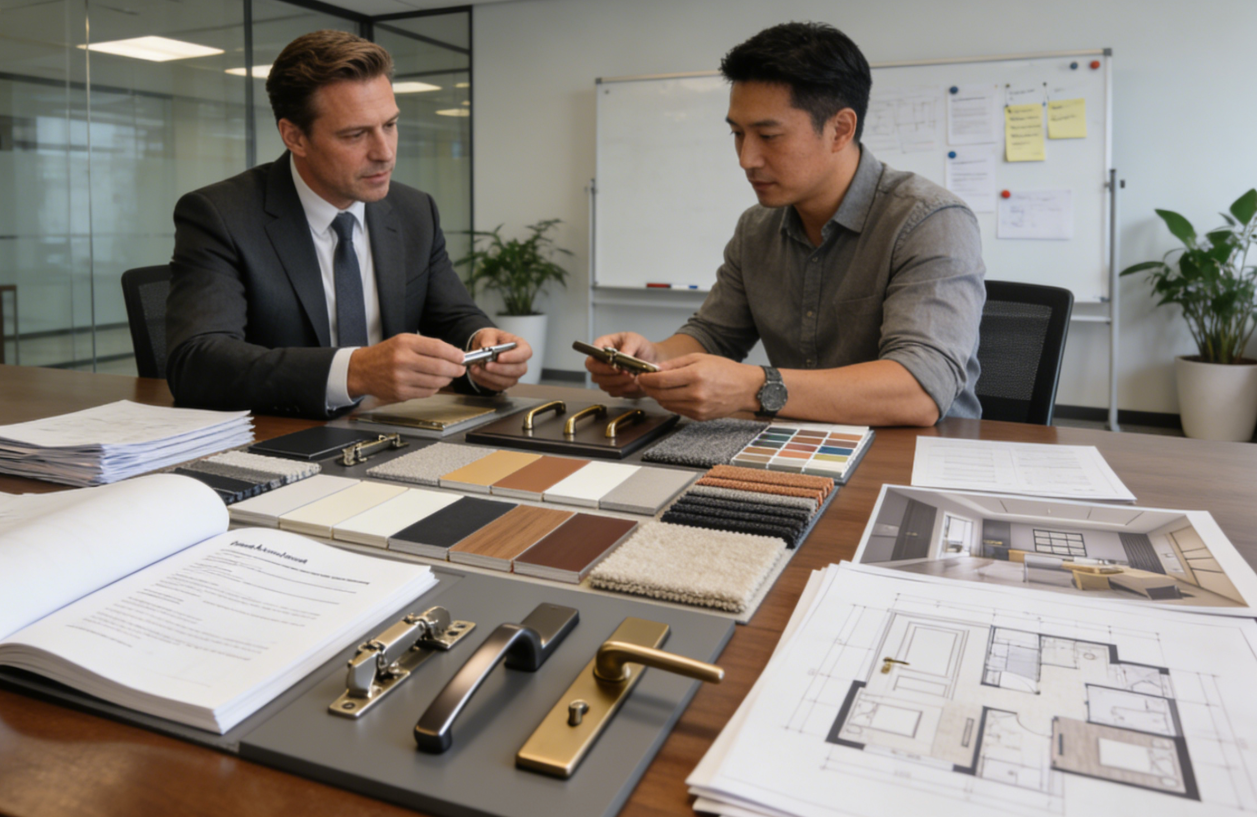
Beyond the supplier type, there are four capability dimensions that are especially important for hotel and apartment projects with elevated design expectations:
1. Design Collaboration Capability
Ability to translate moodboards and design intent into feasible hardware and finish options.
Support for early-stage mock-ups, sample iterations, and fine-tuning of color, gloss, and texture.
Practical feedback on what will perform well in high-traffic hospitality environments.
2. Process & Plating Control
In-house expertise in polishing and electroplating on aluminum components, not only on brass.
Ability to deliver polished chrome on aluminum that visually rivals traditional copper-based chrome systems.
Established control over multiple finish routes: black plating, PVD, and powder coating for different project needs.
3. Quality Traceability & Testing
Look for suppliers who treat surface finish as a critical technical parameter, not just a “color choice.” A robust partner will:
Run routine salt spray tests to verify corrosion resistance.
Test adhesion and coating thickness to ensure the finish will survive real-world use.
Monitor color consistency, gloss, and brightness to keep every batch aligned with the approved master sample.
Operate under recognized quality systems such as ISO for repeatability and documentation.
This level of discipline is especially important when your bathrooms are exposed to different water qualities, cleaning chemicals, and heavy daily usage.
4. Delivery & Project Coordination
For hotel chains and multi-building residential developments, timing and coordination are part of quality:
The ability to align production with phased construction schedules.
Stable finishes across multiple batches over time (so late-phase rooms look like early-phase rooms).
Clear communication channels when project changes or value-engineering requests arise.
A supplier who combines design support, in-house hardware processing, and in-house plating is typically far better positioned to manage these moving parts than one who has to coordinate several external subcontractors.
What This Means for Your Next Shower Program
If your pipeline includes boutique hotels, branded residences, or long-stay apartments with glass shower enclosures, the safest path is to partner with a manufacturer who:
Processes the hardware in-house (from cutting and machining to polishing).
Operates its own electroplating and surface treatment lines for aluminum and other metals.
Can demonstrate real testing capability: salt spray, adhesion, coating thickness, color and brightness control.
Has a track record of working with design teams, not just supplying catalog products.
This is not about choosing the “most complex” supplier; it is about choosing the most accountable one. In the era of matt black, PVD, and premium finishes on aluminum, vertical control over both hardware and plating is no longer a luxury — it is a practical form of risk management for developers and procurement teams.
#HotelDevelopment #ResidentialProjects #BathroomDesign #ShowerEnclosures #MattBlack #SurfaceFinishing #Electroplating #AluminumHardware #QualityControl #Procurement #DesignManagement