Kitchen & Bath Industry Report: KBIS 2026 Trends, Wellness & Smart Tech | Wakebath
Kitchen & Bath Industry Weekly Report
Week of March 19–26, 2026 · KBIS 2026 Special Edition
In This Report:
1 . Executive Summary
2 . Product Innovations
3 . Market Trends
4 . Consumer Preferences
5 . Regulatory Updates
6 . Renovation ROI
7 . Conclusion & What We Can Do
🔍 Executive Summary
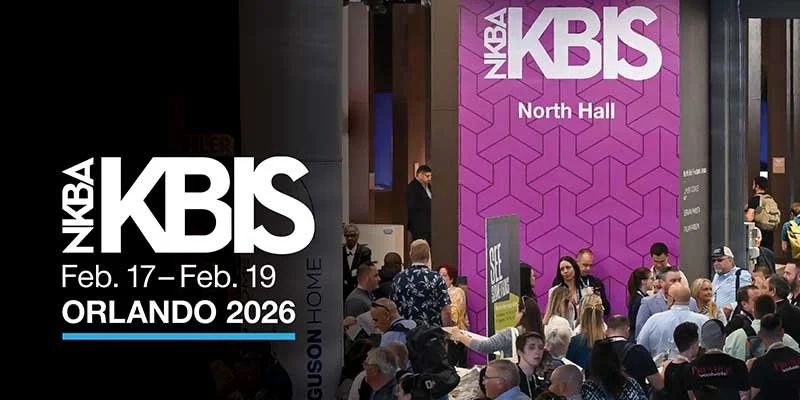
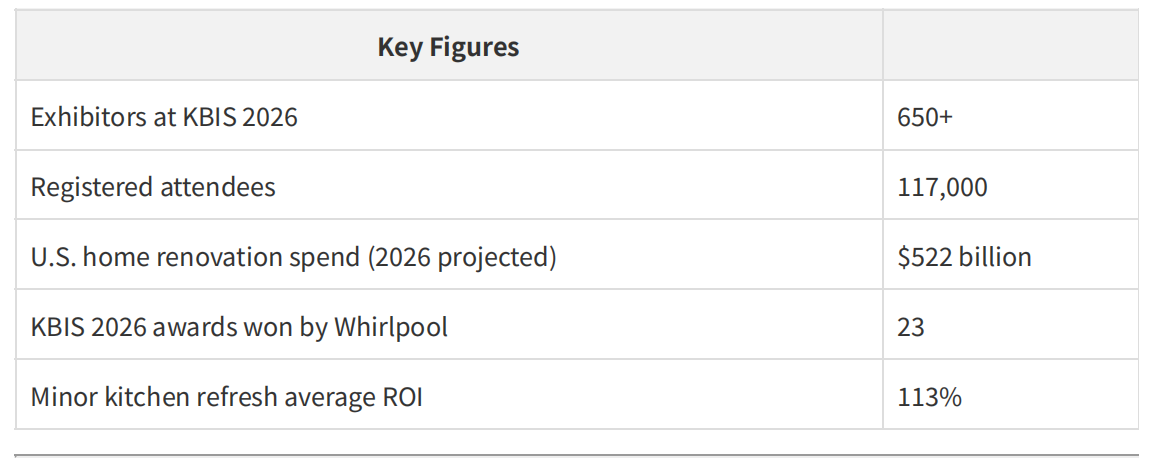
The week of March 19–26, 2026 was defined by the continued momentum of KBIS 2026 (Kitchen & Bath Industry Show, Orlando, FL) — the world's largest kitchen and bath industry event, drawing over 650 exhibitors and 117,000 registered attendees.
Three forces are converging to reshape the industry: wellness-driven design, smart home integration, and sustainability imperatives. At the same time, shifting consumer psychology — from aspirational to performance-driven — is fundamentally changing how buyers evaluate and purchase kitchen and bath products.
For B2B buyers, designers, and manufacturers, this week's developments signal both urgency and opportunity.
🛁 Product Innovations
KBIS 2026 delivered a wave of product launches that signal where the industry is heading. The clearest pattern: wellness and intelligence are no longer premium add-ons — they are becoming baseline expectations.
Kitchen
Kohler Aquifer 4-in-1 Beverage Faucet (Best of KBIS 2026)
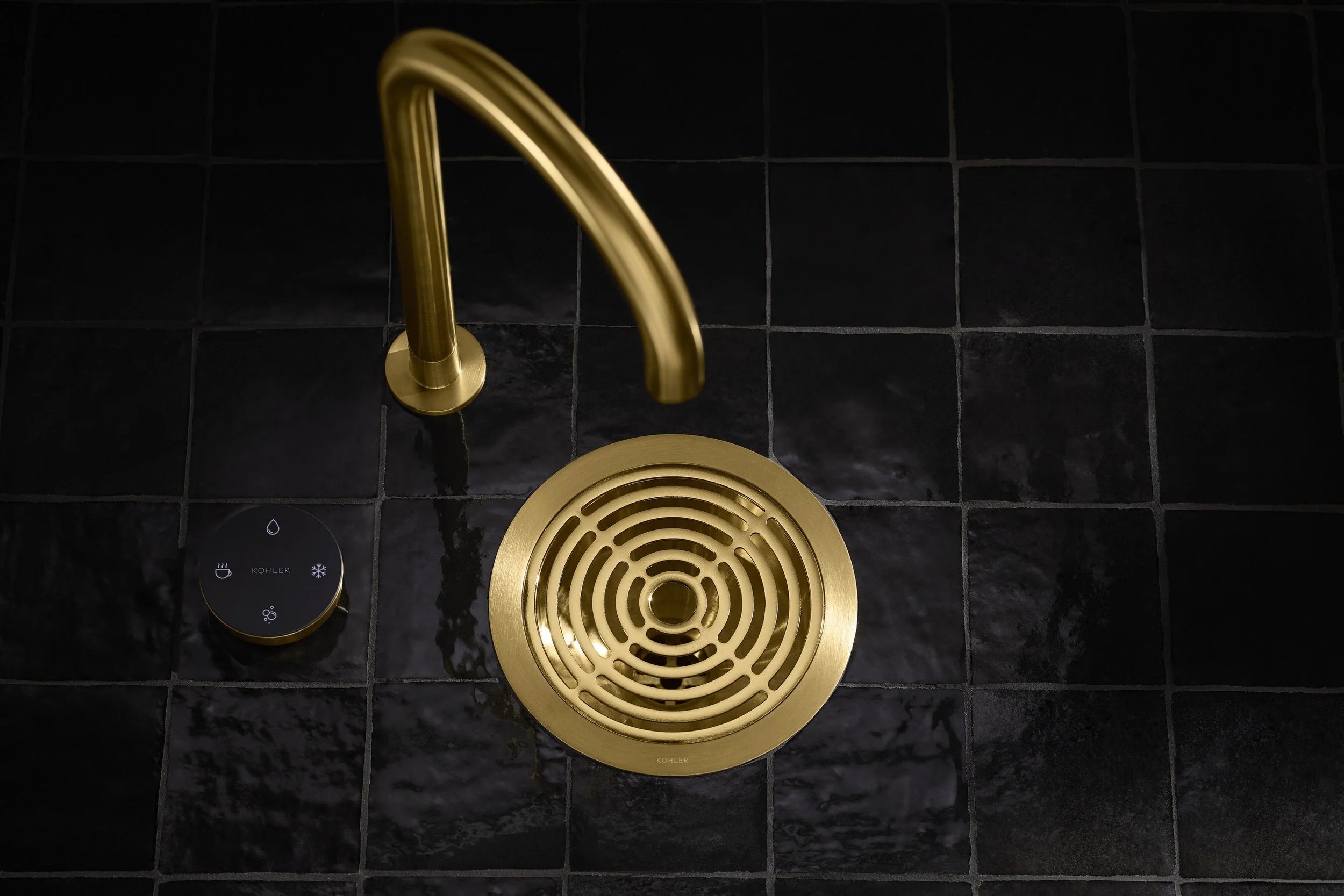
Delivers chilled, near-boiling, ambient, and sparkling water from a single sleek spout, activated by touch or wave. Built-in safety controls prevent accidental scalding. This product directly addresses the growing demand for integrated hydration stations in modern kitchens.
Whirlpool Built-in Nugget Ice Refrigerator (Best of KBIS 2026)
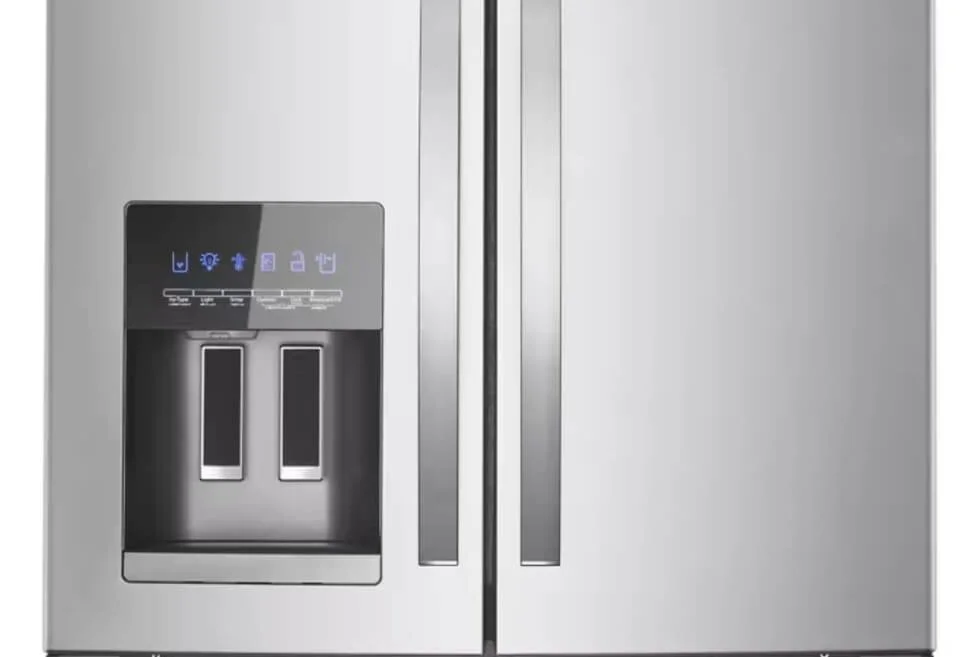
The industry's first built-in, in-door nugget ice maker in a 36-inch French door model — while retaining a second ice maker for traditional cubes. A clear signal that appliance brands are responding to the "beverage station" trend cited by 85% of designers as a top client request.
GE Profile Smart 4-Door Refrigerator
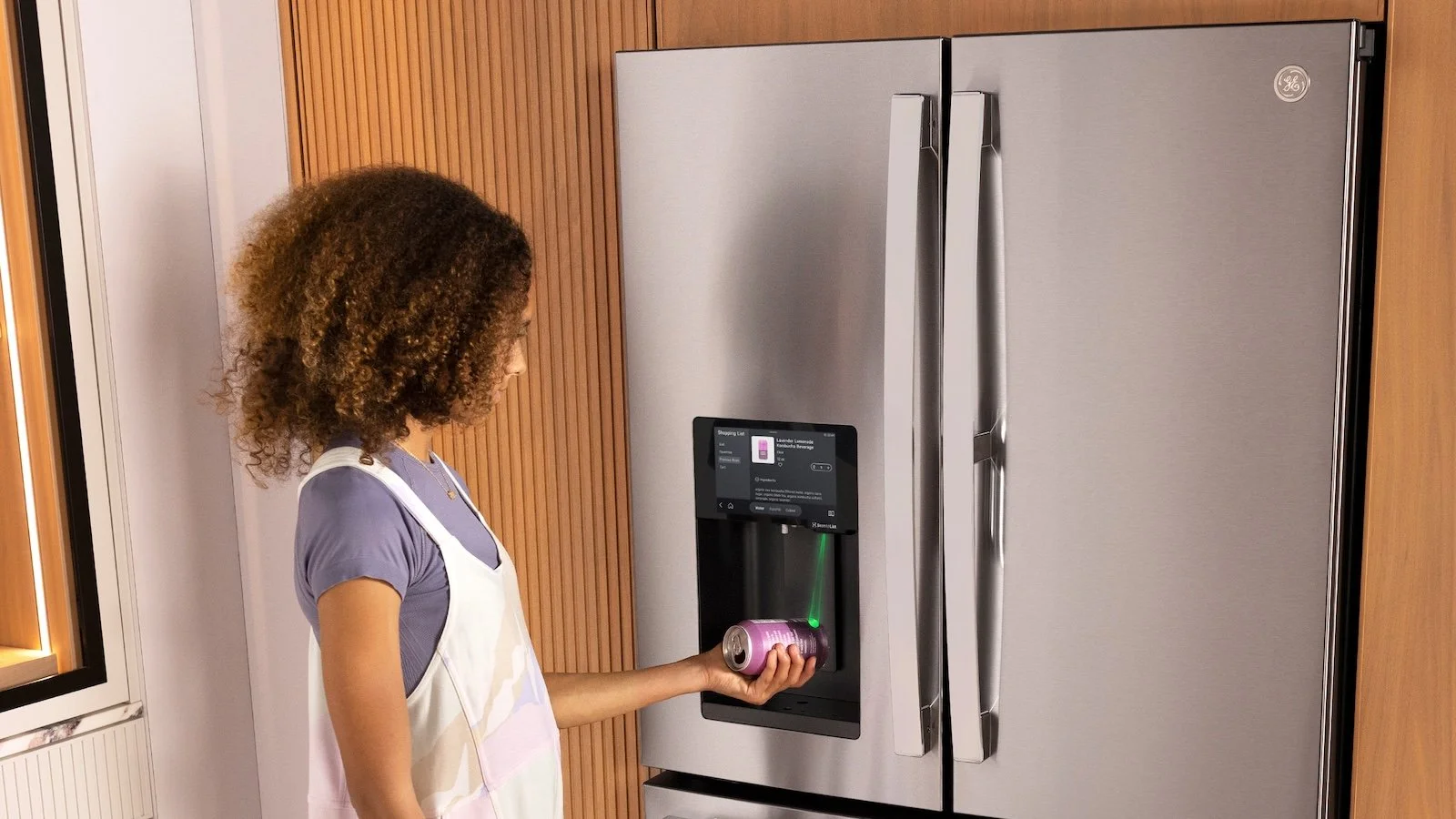
Features a patented built-in barcode scanner for automatic grocery list management and FridgeFocus AI cameras for remote monitoring of perishables. AI-assisted kitchen management is moving from concept to commercial product.
SKS All-in-One Laundry Solution
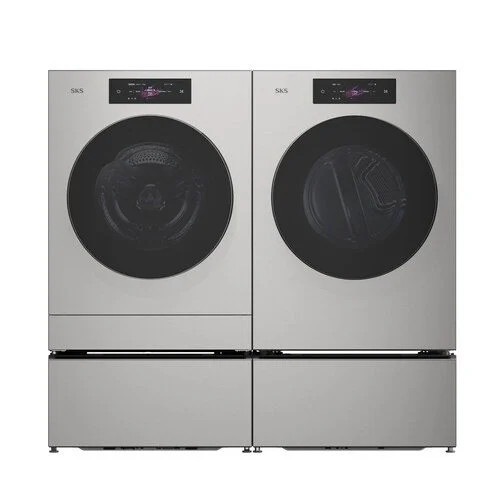
A 29-inch ventless heat pump washer-dryer combo that completes a full cycle in 90 minutes with AI-powered settings — addressing the multipurpose space trend as laundry integrates into kitchen and utility areas.
Bath
LAUFEN VAL Luminex Freestanding Tub
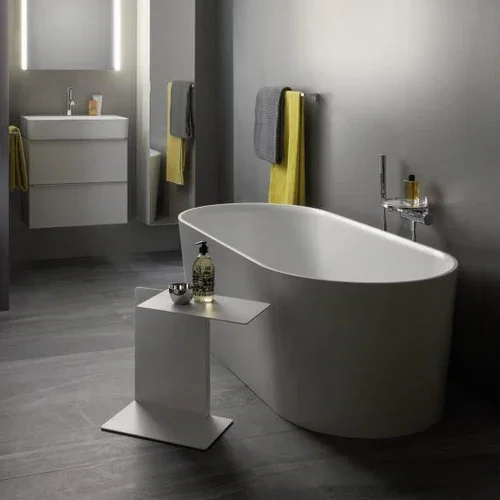
Crafted from translucent Sentec mineral casting with an integrated LED panel for customizable chromatherapy. The tub transforms the bath into a full sensory experience — the most visible expression of the wellness-driven design movement at KBIS 2026.
EMPAVA Smart WiFi Cold Plunge Tub (Silver Best of KBIS 2026 — Wellness Trailblazer)
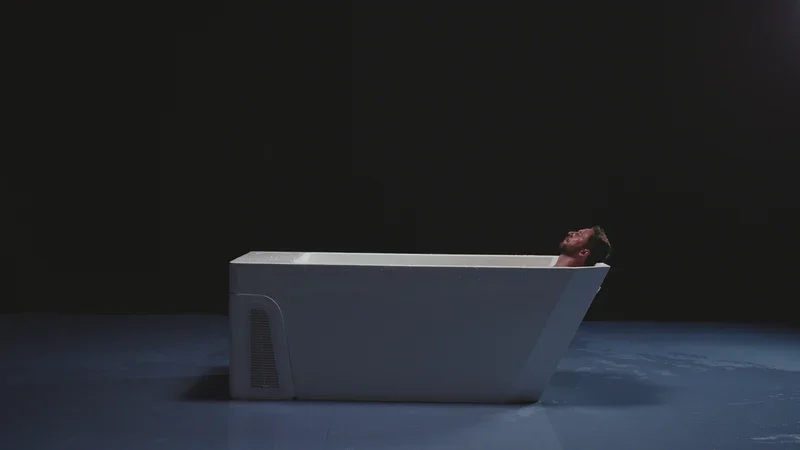
Indoor/outdoor capable with smart WiFi controls for precise temperature management. Cold plunge therapy has moved from athletic niche to mainstream bathroom feature.
BLANCO OOVALON Sink & LUNEOO Faucet (iF Design Award 2026)
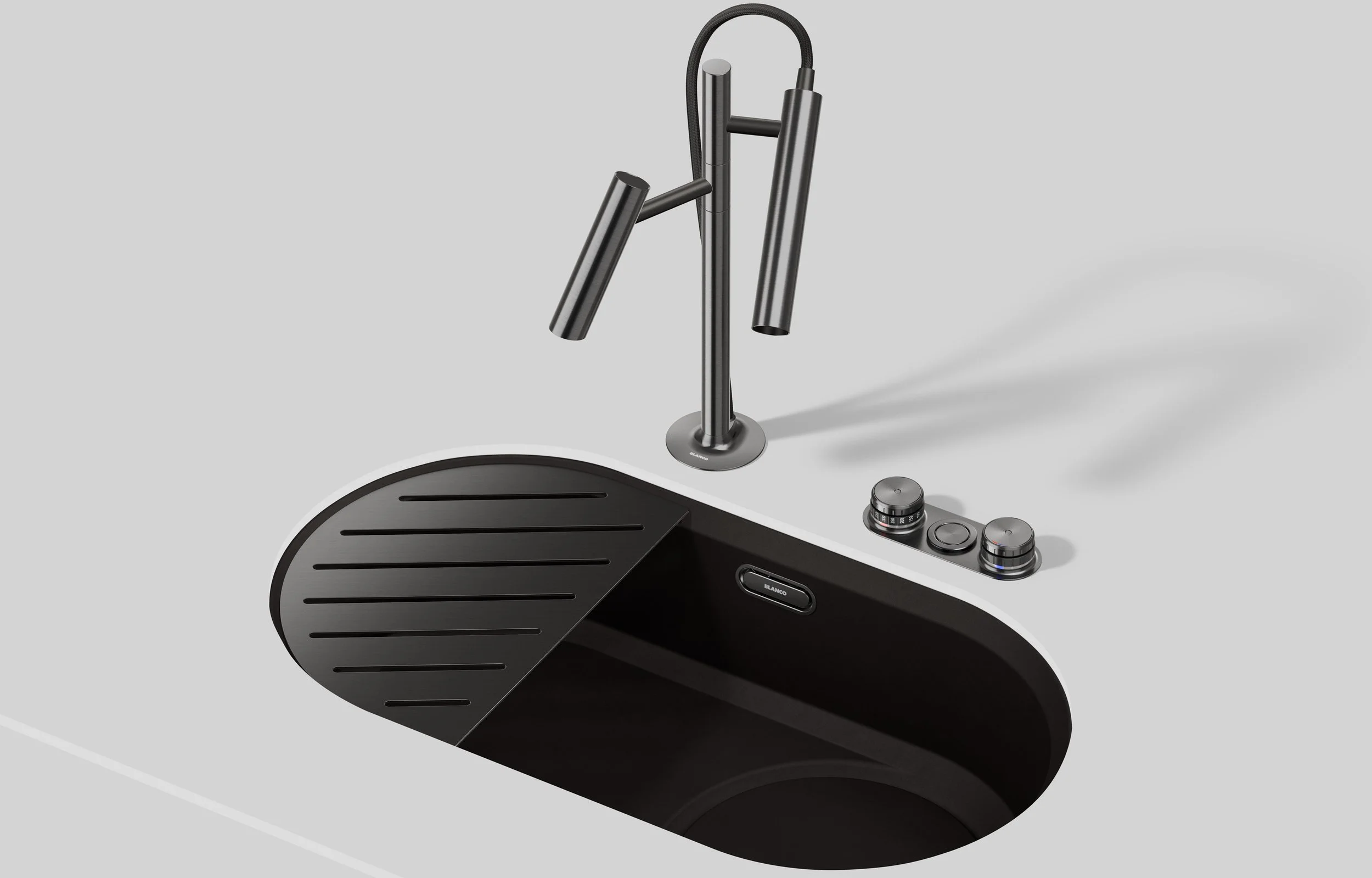
The OOVALON is crafted from BLANCO's new VELGRANIT® material — velvety texture, scratch and stain resistant. The LUNEOO features an electronic dial for precise water control. Celebrating BLANCO's 100th anniversary, this launch demonstrates that material innovation remains a key differentiator.
Moen Magnetix Plus Shower System
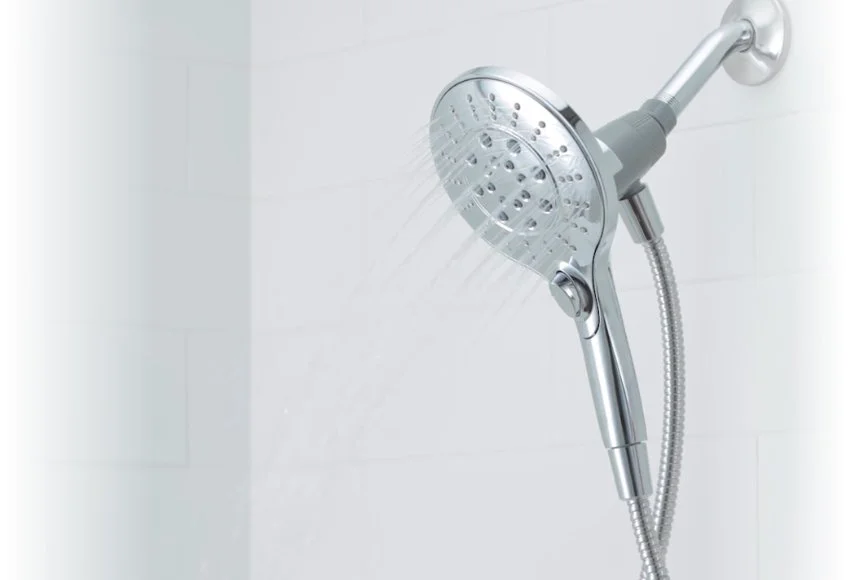
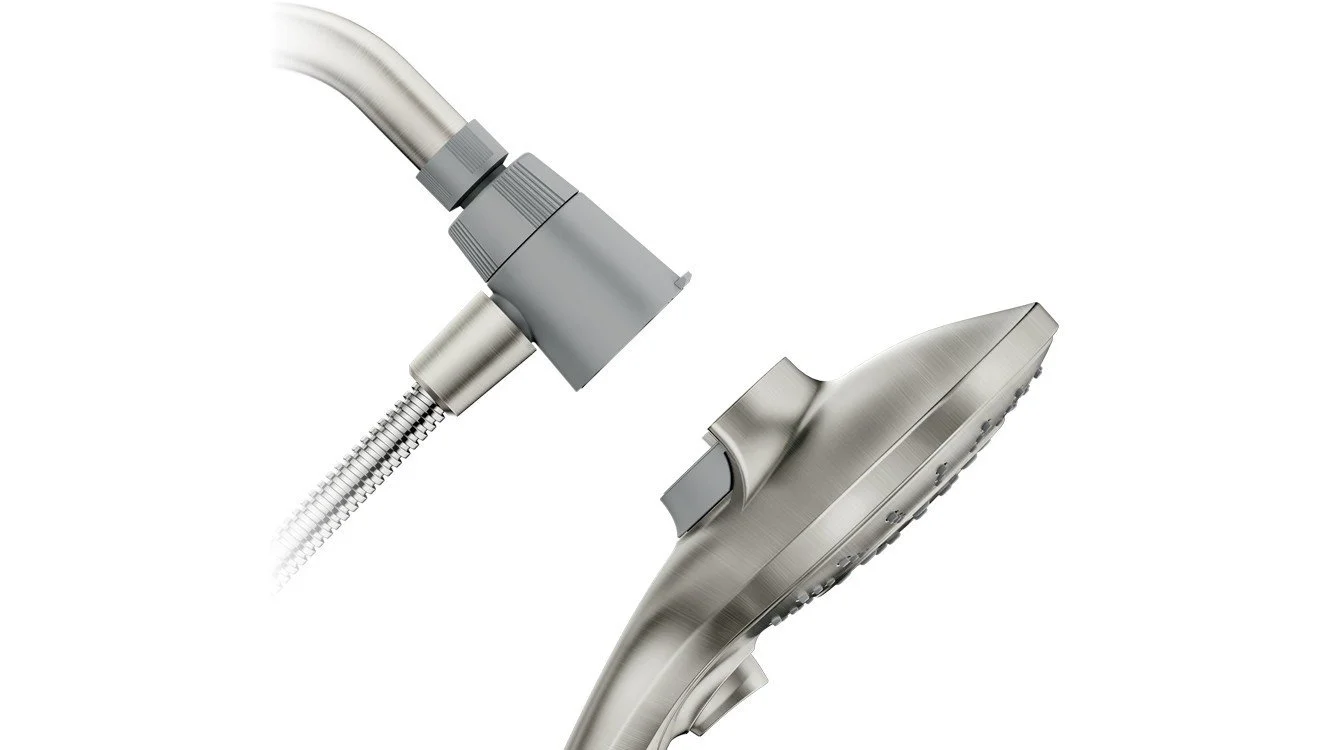
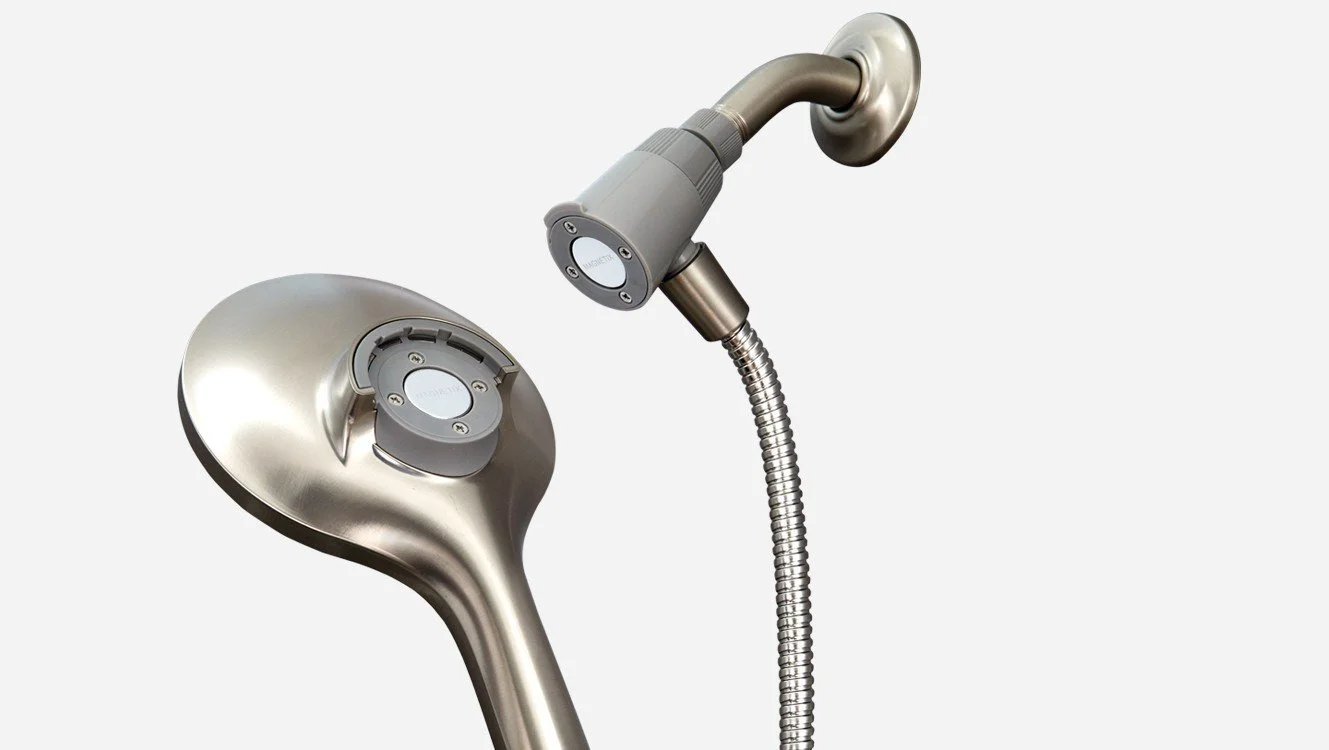
A 2-in-1 shower combining a rain shower with a handheld via magnetic docking, eliminating extra wall hardware. Simplicity of installation is increasingly a B2B purchasing criterion.
📊 Market Trends
The $522 Billion Renovation Market
U.S. homeowners are projected to spend $522 billion on home renovations in 2026, according to Houzz's 2026 State of the Industry report. Despite economic headwinds, the kitchen and bath segment remains resilient, driven by aging housing stock and the continued shift toward home-as-lifestyle.
Industry confidence is recovering: the share of architects reporting a "good or very good" business outlook rose from 33% in 2025 to 55% in 2026. Among bath specialists, the figure climbed from 41% to 58%.
Six Design Themes Dominating 2026
The NKBA 2026 Bath Trends Report identifies six themes shaping the year's design direction:
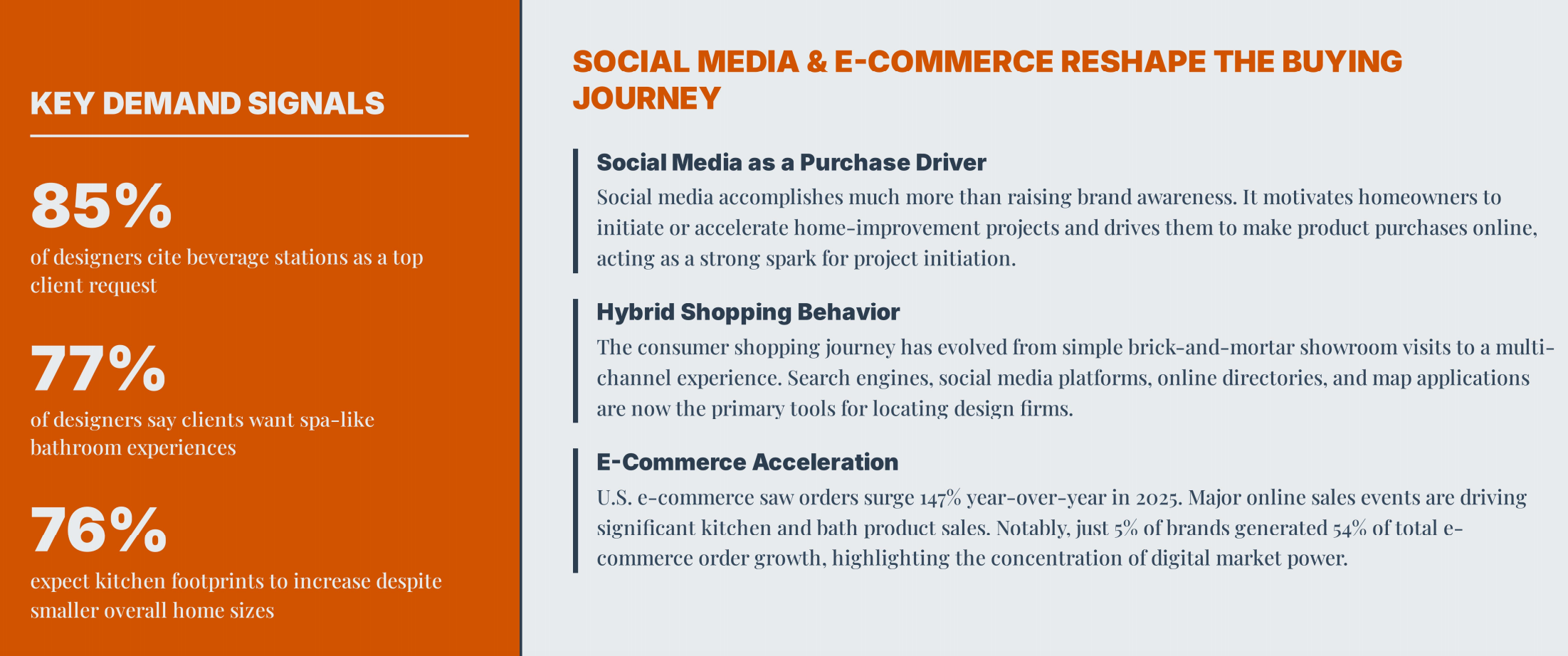
Wellness & Spa (28%) — Steam showers, chromatherapy tubs, and air purification are being specified as standard features, not upgrades. 77% of designers report that clients are requesting spa-like bathroom experiences.
Smart Home Integration (22%) — Voice-activated faucets, AI-powered refrigerators, and connected water heaters are moving from showroom novelty to specification standard.
Sustainable Materials (18%) — Recycled content, low-VOC finishes, and water-efficient fixtures are increasingly required by both regulation and client preference.
Modern Traditional (16%) — Clean slab-front cabinetry with warm white oak tones, arched range hoods, and fluted vanity details. A softer, more relaxed interpretation of tradition that resonates with a broad buyer demographic.
Multipurpose Spaces (10%) — 85% of designers cite dedicated beverage stations as a top client request. Kitchen footprints are expanding to accommodate working, entertaining, and wellness routines simultaneously.
Hardware & Color Shifts — Brushed nickel and polished chrome are gaining ground over matte black. Benjamin Moore's 2026 Color of the Year, Silhouette AF-655 (rich espresso brown), signals a broader shift from cool grays to warm, earth-inspired tones.
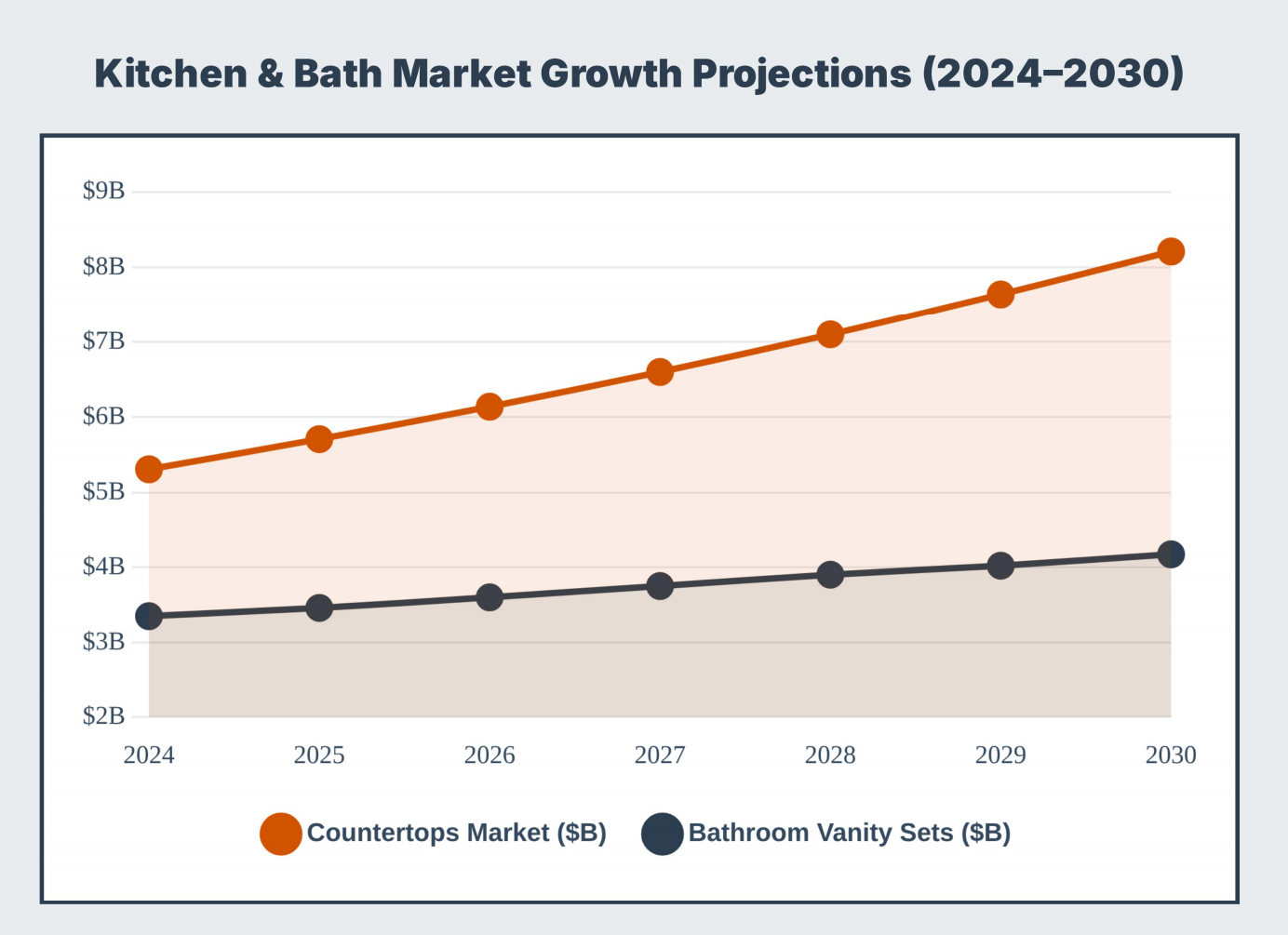
Bathroom Faucet Market: Premiumization Through 2035
The global bathroom faucet market is entering an accelerated value expansion phase, driven by premiumization, smart home integration, and renovation cycles. The countertop market is projected to grow from $5.31B (2024) to $8.21B (2030), while bathroom vanity sets are expected to expand from $3.35B to $4.17B over the same period.
Sources: Houzz 2026 State of the Industry (March 24, 2026); NKBA 2026 Bath Trends Report; IndexBox Bathroom Faucet Market Report (March 21, 2026)
👥 Consumer Preferences
At KBIS 2026, futurist Jaye Anna Mize delivered the State of the Industry keynote, identifying five behavioral shifts that are fundamentally changing how consumers engage with kitchen and bath design.
1. Beyond the Dream Home
Millennials and Gen Z are moving away from aspirational, one-time transformations. The question has shifted from "What does my dream kitchen look like?" to "How do I make this kitchen work better for the next 5–7 years?" Premium is now defined by performance and adaptability, not visual scale.
2. Preservation Over Luxury
With economic, environmental, and social volatility as the backdrop, the home is increasingly treated as infrastructure for protection. Durable materials, reliable systems, and resilient designs are replacing delicate, decorative choices. The definition of "premium" has fundamentally changed.
3. Streamlined Shopping via AI
Consumers now arrive at showrooms with AI-curated shortlists and screenshots. The conversation has shifted from "What are my options?" to "Will this work, will this last, will this fit the budget?" — from discovery to validation. For B2B sellers, this means the quality of online product information is now a primary sales tool.
4. The Kitchen as Community Hub
Only 14% of new homes now include a formal dining room (down from near-universal in the 1990s), while 75% integrate the kitchen into the main living area. The kitchen has become the primary social infrastructure of the home — a shift with profound implications for product specification and space planning.
5. Lifestyle Living
Home design is now part of a continuous lifestyle ecosystem. A hotel stay influences bathroom expectations; a café shapes how a kitchen should feel. Design has shifted from decoration toward coherence with personal identity — and brands that understand this are winning the specification battle.
⚖️ Regulatory Updates
DOE 2026 Water Heater Efficiency Standards
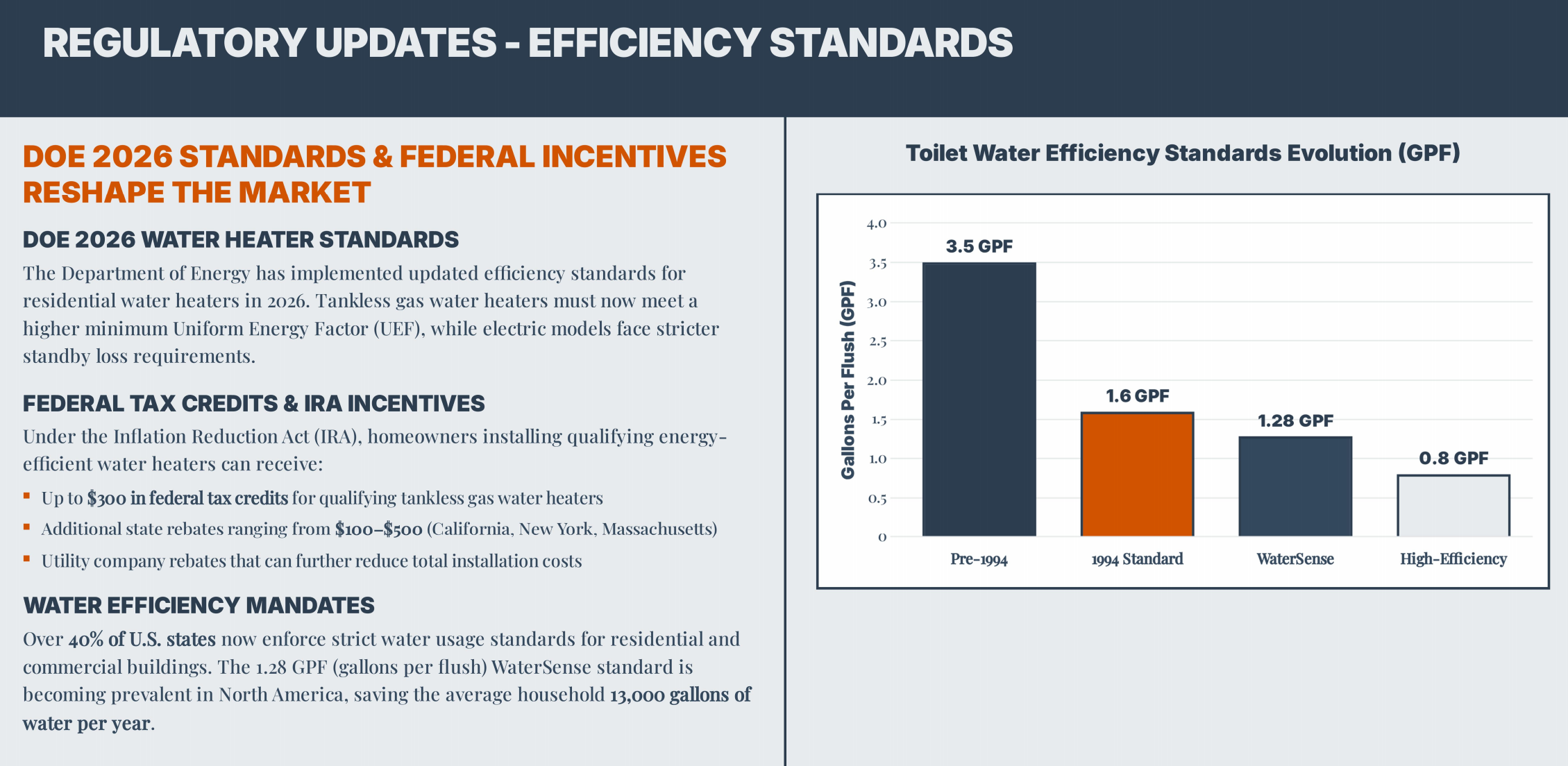
The U.S. Department of Energy has implemented updated efficiency standards for residential water heaters in 2026. Tankless gas water heaters must now meet a higher minimum Uniform Energy Factor (UEF), while electric models face stricter standby loss requirements. Manufacturers that did not begin compliance planning in 2024–2025 are now facing accelerated certification timelines.
Federal Tax Credits Under the Inflation Reduction Act
Homeowners installing qualifying energy-efficient water heaters can receive up to $300 in federal tax credits under the IRA, plus additional state and utility rebates ranging from $100–$500 in California, New York, and Massachusetts. For B2B buyers advising end clients, communicating these incentives is increasingly a competitive differentiator.
Water Efficiency Mandates: 1.28 GPF Is the New Standard
Over 40% of U.S. states now enforce strict water usage standards. The 1.28 GPF (gallons per flush) WaterSense standard is becoming the de facto requirement across North America, saving the average household approximately 13,000 gallons of water per year compared to pre-1994 fixtures (3.5 GPF). Products that do not meet WaterSense certification are increasingly excluded from commercial and institutional specifications.
Global Supply Chain Compliance: The "One-Step" Imperative
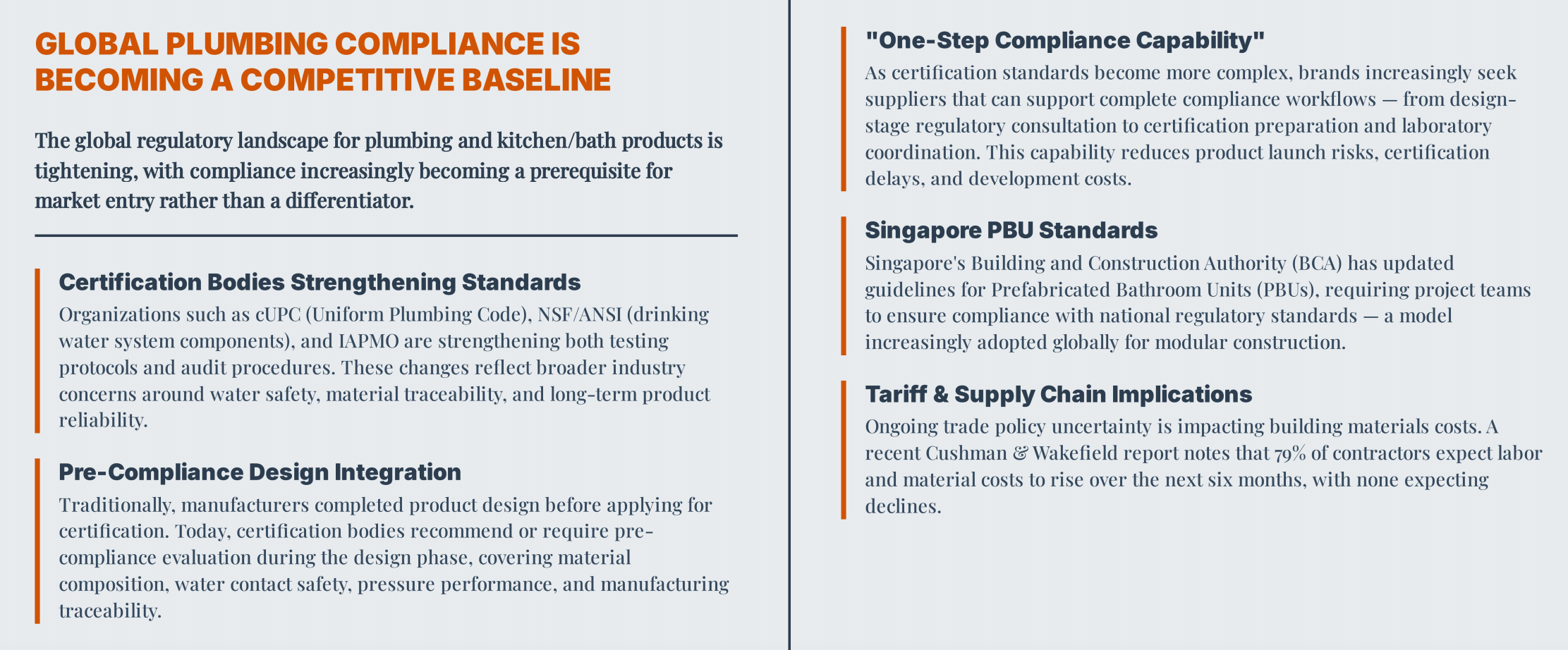
Certification bodies including cUPC, NSF/ANSI, and IAPMO are strengthening testing protocols and audit procedures globally. The key strategic shift: compliance must be integrated at the design phase, not added at the end. Brands that build "one-step compliance capability" into their development process will gain 3–6 month speed-to-market advantages over competitors who treat compliance as an afterthought.
💰 Renovation ROI: Strategic Investment Beats Luxury Overhaul
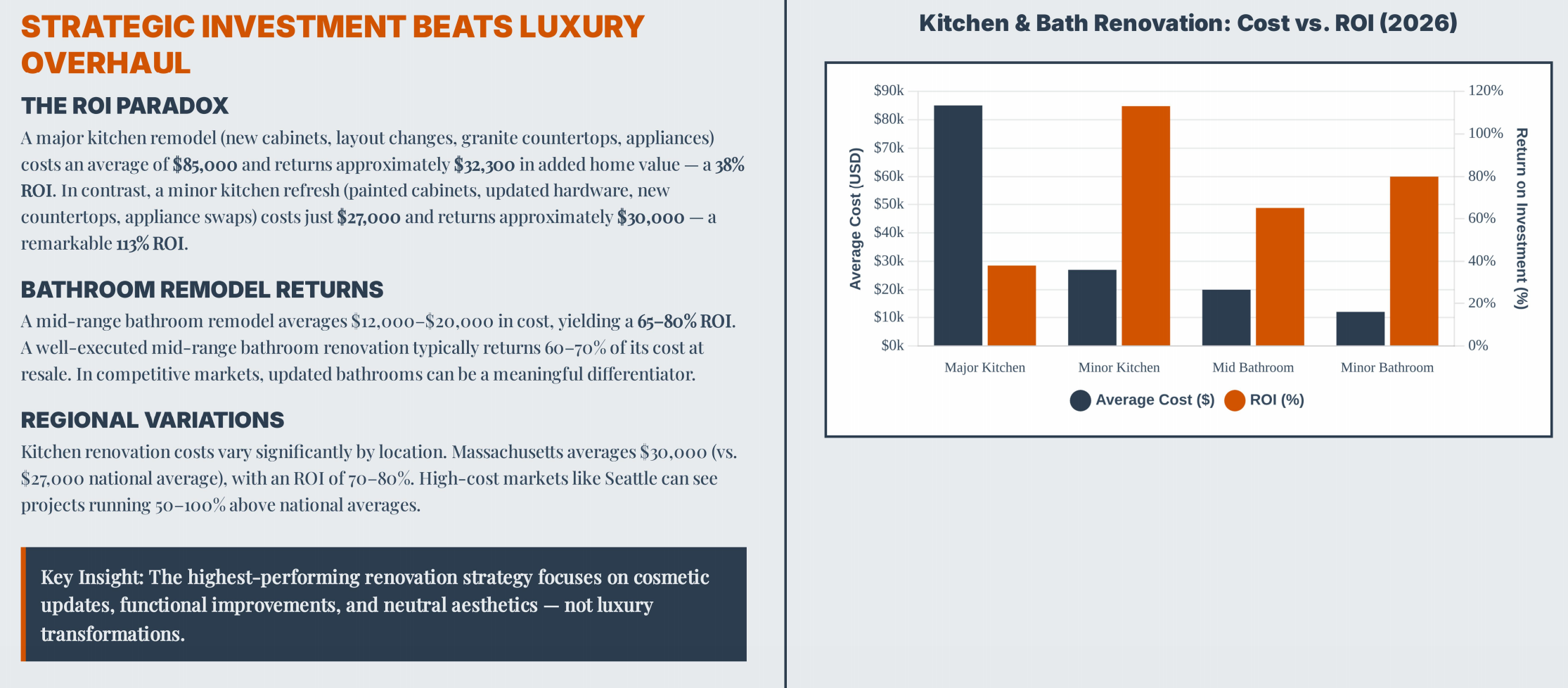
One of the most actionable insights from this week's data is the stark difference in return on investment between major and minor renovation projects.
A major kitchen remodel averaging $85,000 delivers only a 38% ROI at resale — meaning homeowners recover less than half their investment. By contrast, a minor kitchen refresh averaging $27,000 (painted cabinets, updated hardware, new countertops) delivers a 113% ROI — recovering more than the full investment.
The pattern holds in bathrooms: mid-range bathroom remodels ($12,000–$20,000) deliver 65–80% ROI, while over-specified luxury renovations frequently underperform.
The strategic implication for B2B buyers and designers: The highest-performing renovation strategy focuses on cosmetic updates, functional improvements, and neutral aesthetics — not luxury transformations. Clients who understand this data make faster, more confident purchasing decisions.
✅ Conclusion & What We Can Do
The week of March 19–26, 2026 crystallized several long-building shifts in the kitchen and bath industry. The convergence of wellness culture, smart technology, sustainability imperatives, and shifting consumer psychology is fundamentally redefining what kitchens and bathrooms are for — and what they need to deliver.
Five takeaways for industry stakeholders:
The first is that wellness is the new luxury baseline. Spa-like bathrooms and health-focused kitchen features are becoming standard consumer expectations, not premium upgrades. Products without wellness credentials will increasingly struggle to justify premium pricing.
The second is that smart technology is now table stakes. AI-powered refrigerators, connected water heaters, and magnetic shower systems are no longer differentiators — they are becoming the minimum specification for premium products.
The third is that performance beats aesthetics in the purchase decision. Consumers prioritize durability and adaptability over visual drama. The brands winning in 2026 are those that lead with function and back it up with design.
The fourth is that compliance is a competitive advantage. As global standards tighten, brands that integrate compliance early gain speed-to-market advantages. This is especially relevant for manufacturers supplying the North American market.
The fifth is that digital channels dominate discovery. With U.S. e-commerce orders growing 147% year-over-year in 2025, social media and online platforms are now the primary drivers of product discovery — and the quality of digital product presentation is a primary sales tool.
What Wakebath Is Doing About This
At Wakebath, we track these developments not as observers, but as active participants in the supply chain. Our role is to help B2B buyers — designers, contractors, developers, and procurement teams — navigate this complexity with confidence.
If you're sourcing bathroom products for a 2026 project and want guidance on which products meet current efficiency standards, deliver strong ROI, and align with where consumer preferences are heading, we're here to help.
→ Explore Our Bathroom Solutions
→ Contact Our Team
Sources
KBIS 2026 Official Show, Orlando, FL (February 2026)
House Beautiful / AOL: "8 Trends from the World's Biggest Kitchen & Bath Show" (Feb 25, 2026)
Yahoo Finance / PR Newswire: "Whirlpool Celebrates KBIS 2026" (March 24, 2026)
Yahoo Finance: "EMPAVA Earns Multiple Best of KBIS Awards" (March 25, 2026)
KBBFocus: "Houzz 2026 State of the Industry Report" (March 24, 2026)
KBBFocus: "KBIS 2026 — Jaye Anna Mize reveals 5 key global consumer behaviour trends" (March 19, 2026)
IndexBox: "Bathroom Faucet Market Forecast" (March 21, 2026)
Eccotemp: "Federal Tax Credits & Rebates for Energy-Efficient Water Heaters 2026" (March 2026)
Byson International: "When Compliance Becomes the Baseline" (March 24, 2026)
Fixr.com / ASAP Credit Repair: Renovation ROI Analysis (March 25, 2026)
Forbes: "The End of All-White Kitchens" (March 25, 2026)
Kitchen bath industry report 2026, KBIS 2026 trends, bathroom design trends 2026, kitchen renovation ROI, smart bathroom products, wellness bathroom design, DOE water heater standards 2026, B2B bathroom sourcing
The information in this report is sourced from public channels and is for reference only. If you have any objections regarding the content, please contact us for deletion.