Europe Kitchen & Bath Market Insight-(April 2026)
Shifting Standards, Evolving Design, and Material Reconsideration
Introduction
The European kitchen and bath industry is entering a period of structural transition.
Rather than isolated trends, the market is being shaped by a combination of regulatory pressure, design evolution, and material strategy shifts.
These factors are not only influencing product development, but also redefining how decisions are made across the value chain — from design to sourcing and manufacturing.
1. Regulation as a Market Filter
Across Europe, tightening requirements around materials, sustainability, and product transparency are gradually reshaping the competitive landscape.
Upcoming changes in areas such as:
material composition
environmental performance
product traceability
are making compliance a decisive factor, rather than a secondary consideration.
As a result, product eligibility is no longer guaranteed —
it increasingly depends on how well suppliers anticipate and respond to these evolving standards.
2. Design Shift: From Minimalism to Warmth and Experience
European design language is undergoing a noticeable transition.
While minimalism remains relevant, there is a growing movement toward:
warmer color palettes
natural materials and textures
more personalized and “wellness-oriented” spaces
This reflects a broader shift from purely visual design to experience-driven environments, where comfort, tactility, and emotional connection play a larger role.
For manufacturers, this means that surface finish, material quality, and consistency are becoming increasingly important.
3. Digitalization and Changing Buying Behavior
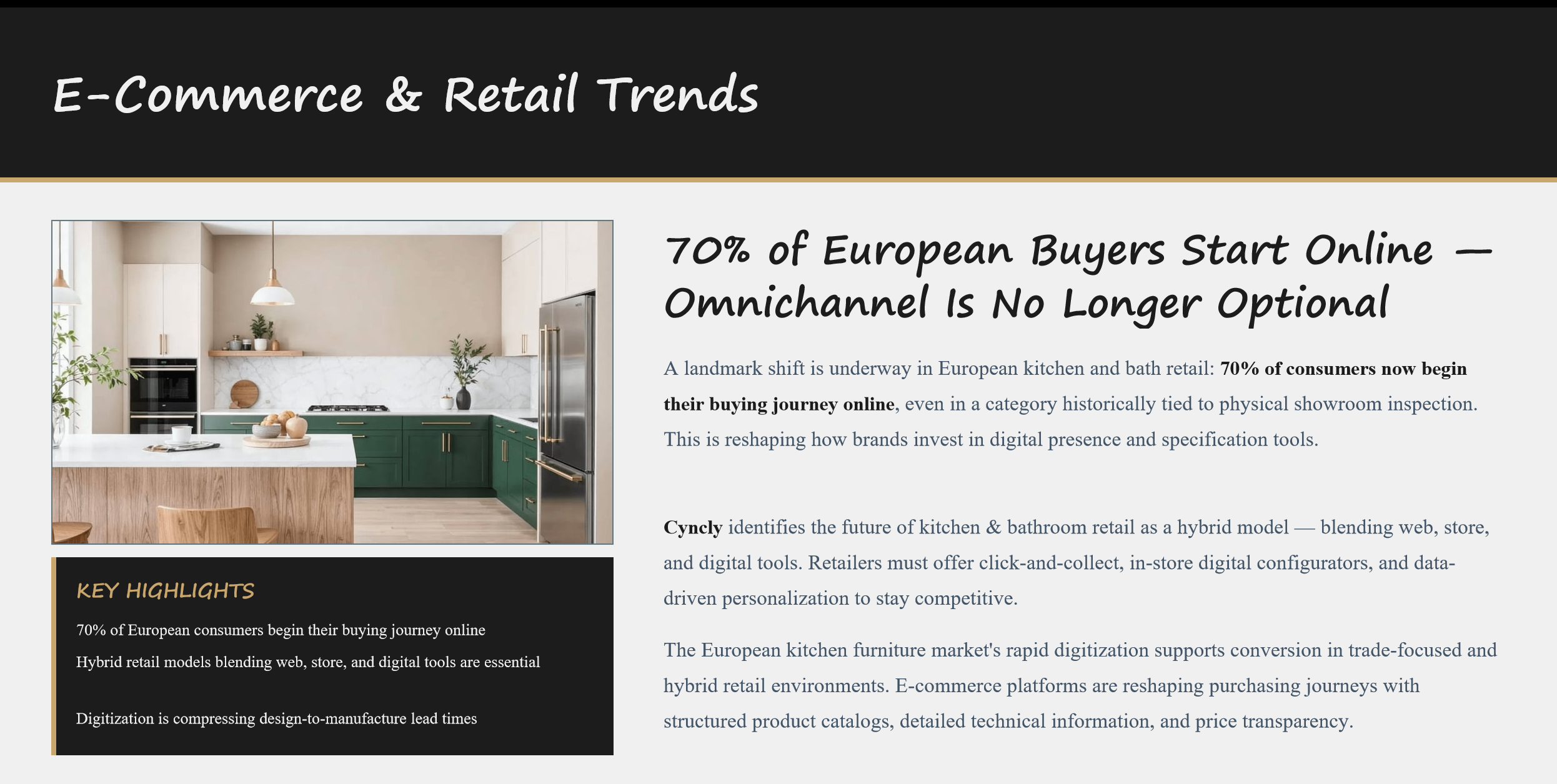
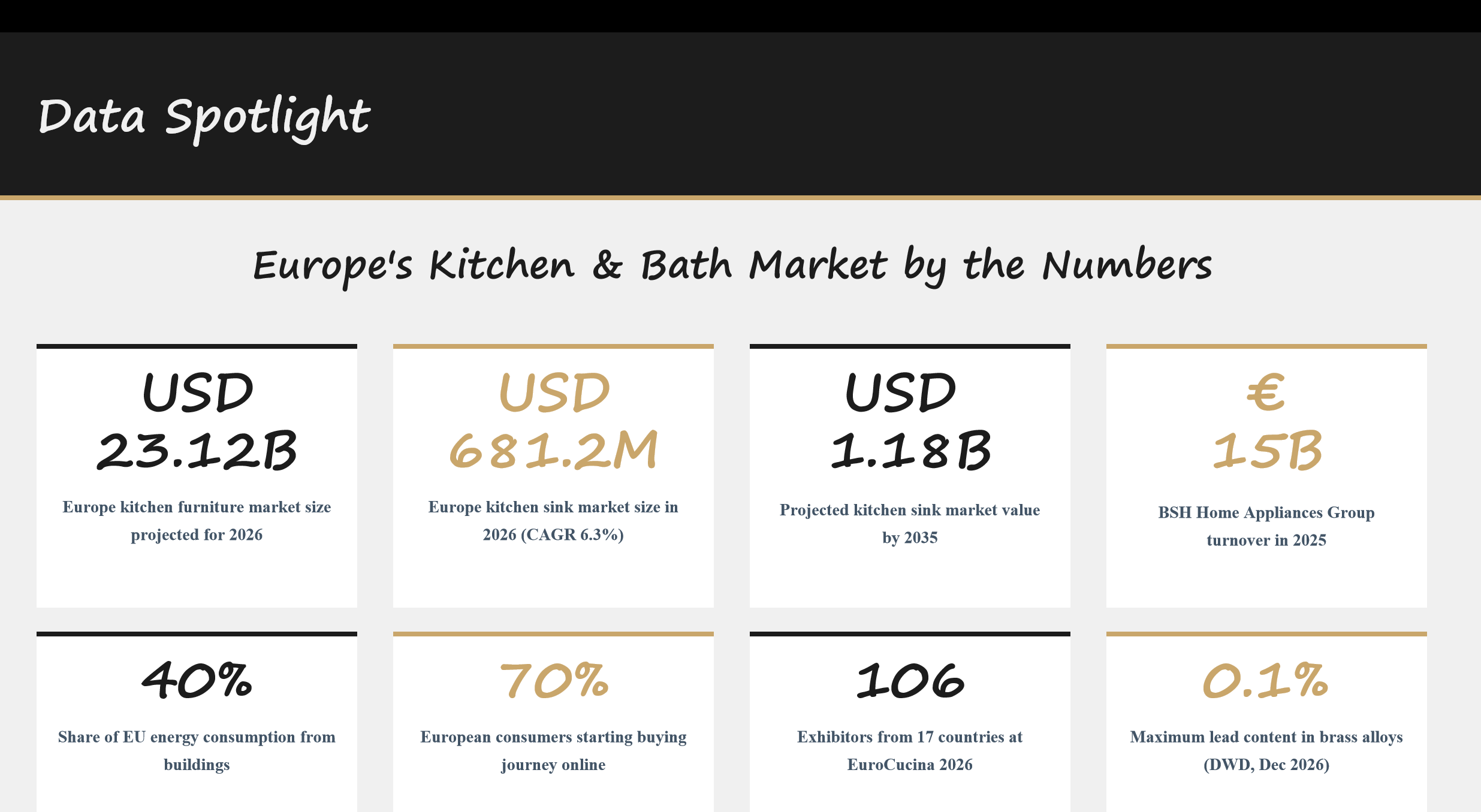
The purchasing journey in the kitchen and bath sector is becoming increasingly digital.
Buyers are:
researching products online earlier
comparing specifications and compliance details more thoroughly
expecting transparency before engaging with suppliers
This shift is accelerating the need for:
clear product documentation
reliable technical data
consistent presentation across channels
Digital visibility is no longer an advantage — it is becoming a baseline requirement.
4. Material Strategy Under Cost Pressure
Rising raw material costs — particularly in metals — are pushing companies to rethink traditional material choices.
This is leading to:
earlier involvement of sourcing teams in product development
increased interest in alternative materials
greater focus on lifecycle cost rather than initial price
Among these shifts, electroplated aluminum is gaining attention as a viable option for certain applications, offering:
improved cost predictability
consistent surface finish
compatibility with modern design requirements
Material selection is no longer a purely technical decision —
it is becoming a strategic lever.
5. Implications for the Supply Chain
These combined changes are moving decision-making upstream.
Greater emphasis is now placed on:
manufacturing capability
process control
long-term consistency
Suppliers are expected not only to deliver products, but also to support:
compliance readiness
material optimization
stable, scalable production
This represents a shift from transactional sourcing to capability-driven partnerships.
Conclusion
The European kitchen and bath market is not simply evolving —
it is becoming more structured, more regulated, and more demanding.
Success in this environment will depend on the ability to align:
compliance
design direction
material strategy
manufacturing capability
Companies that can integrate these elements effectively will be better positioned to adapt — and to compete — in the next phase of the industry.
Understanding how these shifts interact is key to making informed product and sourcing decisions in the European market.
#KitchenAndBath #EuropeanMarket #BuildingMaterials
#ArchitecturalDesign #B2BManufacturing #ProductStrategy
#SupplyChain #MaterialInnovation