Asia Kitchen & Bath Market Insight (April 2026)

Speed, Technology, and the Rise of Scalable Customization
Introduction
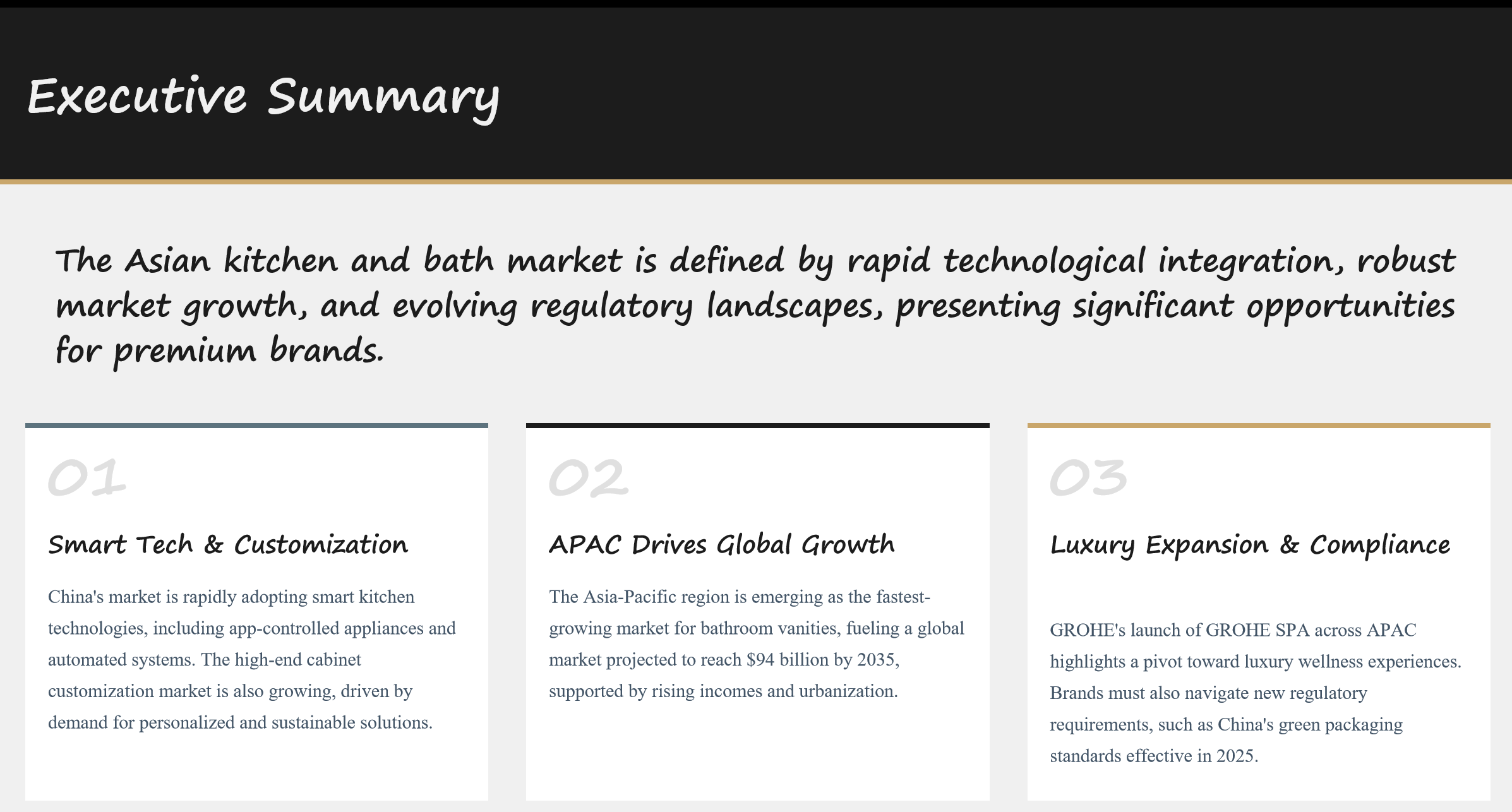
The Asian kitchen and bath market is entering a phase defined by rapid acceleration.
Unlike more mature regions, where change is gradual and structured, Asia is characterized by:
fast adoption of new technologies
strong demand for personalization
continuous pressure on supply chains to adapt
This combination is reshaping not only product expectations, but also how companies compete.
1. Smart Technology Becomes Standard
Smart integration is no longer a niche feature in Asia’s leading markets.
In China in particular, consumers increasingly expect:
app-controlled appliances
automated kitchen systems
seamless integration with smart home ecosystems
This signals a shift from feature-based innovation to system-level functionality, where products must connect, respond, and adapt.
2. Customization at Scale
The demand for personalized solutions is expanding rapidly.
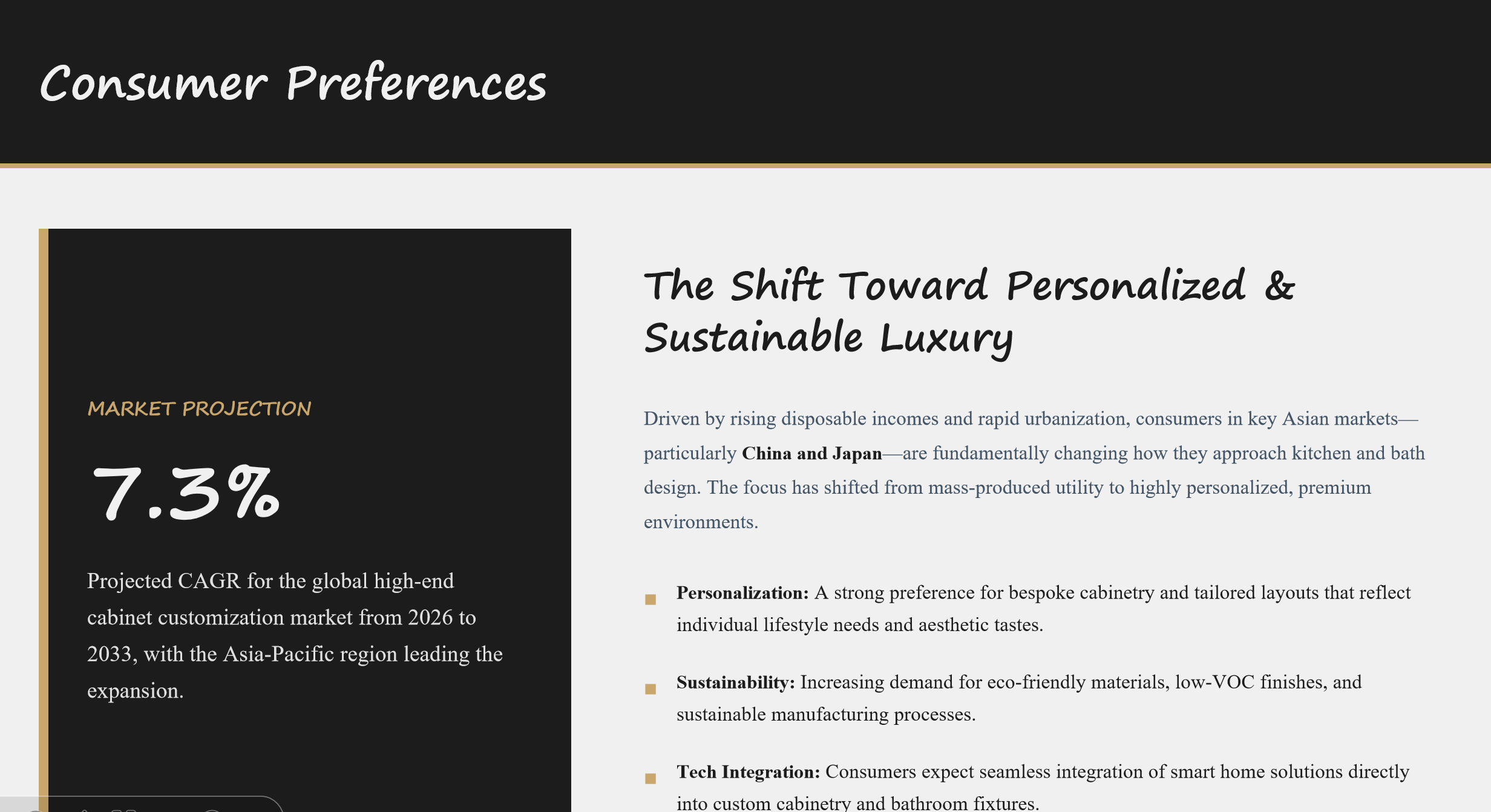
Driven by urbanization and rising disposable incomes in markets such as China and Japan, consumers are moving toward:
bespoke cabinetry
tailored layouts
integrated storage solutions
What was once considered premium is becoming more accessible —
creating new challenges for manufacturers in balancing flexibility with production efficiency.
3. APAC as the Global Growth Engine
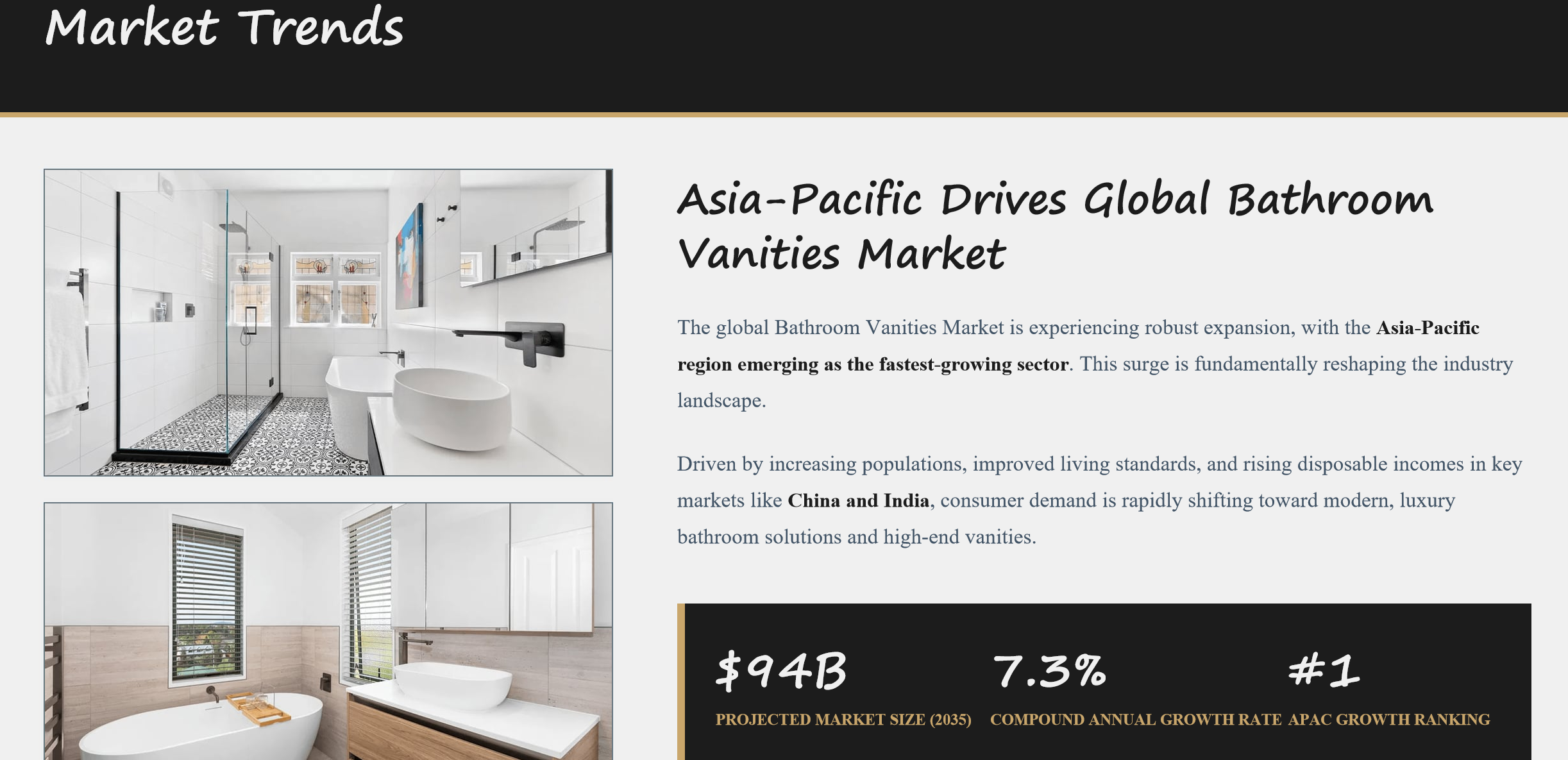
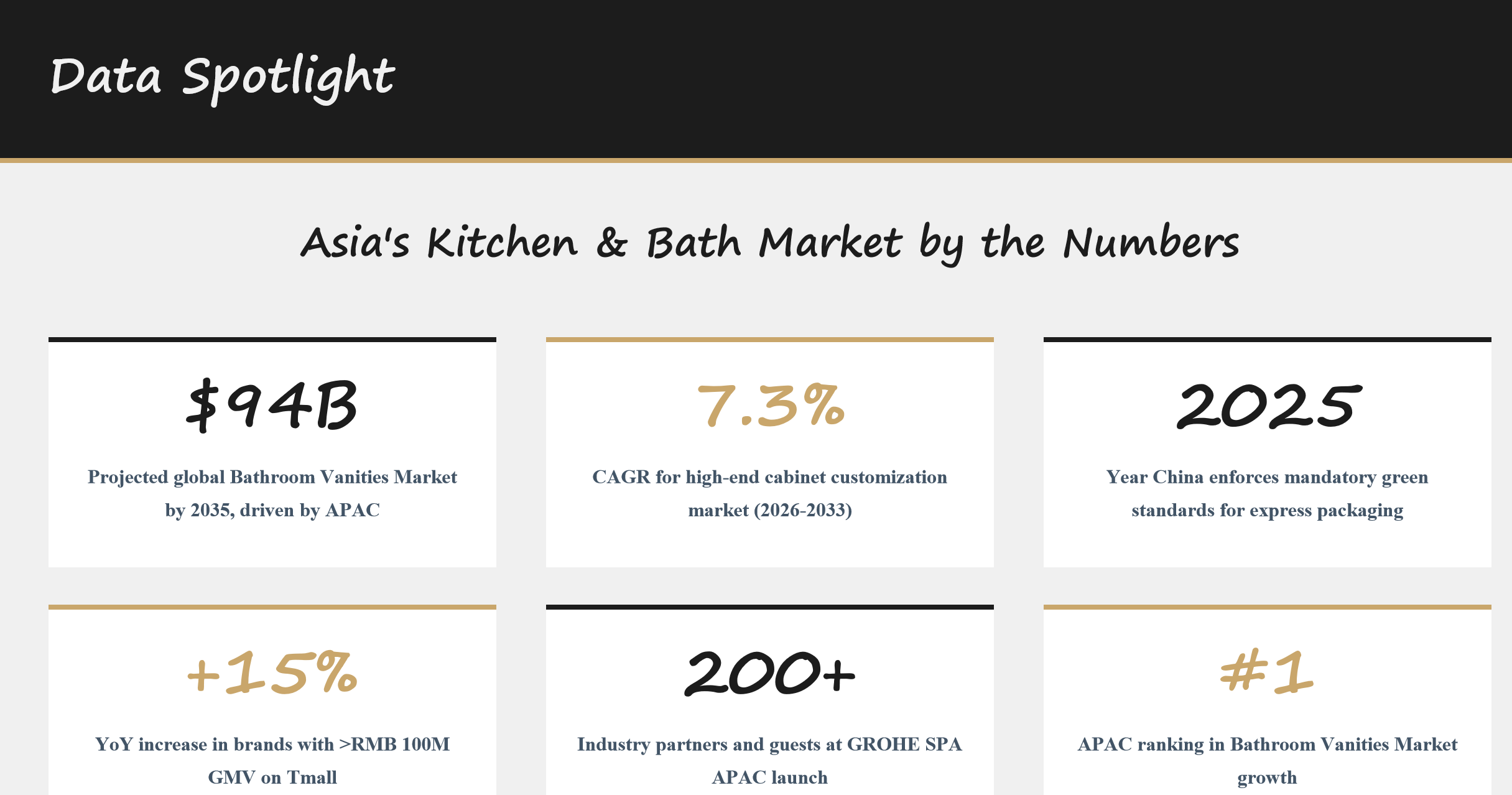
The Asia-Pacific region continues to lead global expansion in the kitchen and bath sector.
Growth is supported by:
population scale
urban development
increasing purchasing power
This positions APAC not only as a high-growth market, but also as a key driver of global industry direction.
4. Sustainability and Compliance Pressure
Rapid growth is accompanied by increasing regulatory expectations.
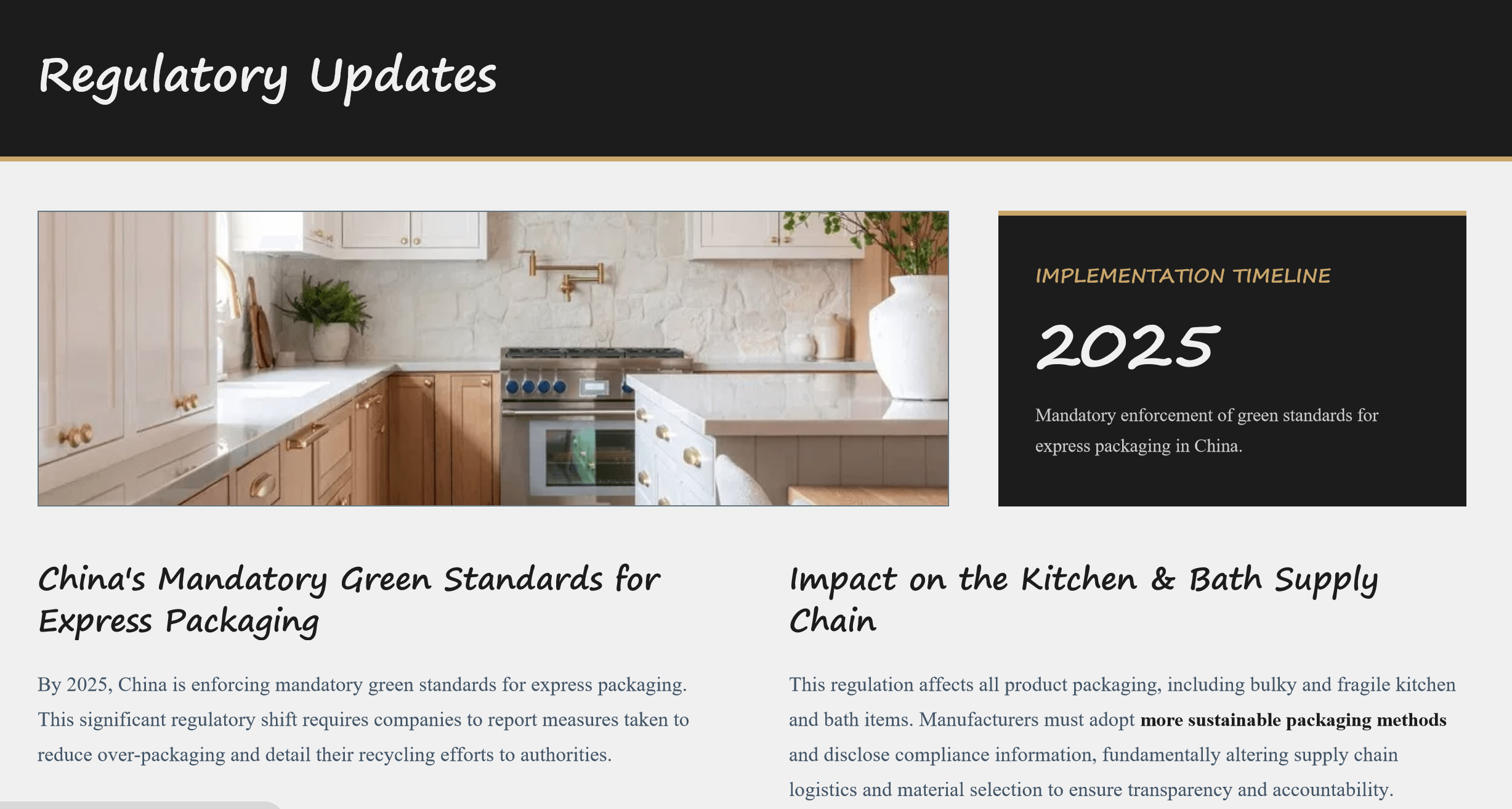
For example, China’s upcoming green packaging requirements (effective 2025) are pushing companies to:
reduce material waste
improve recyclability
enhance transparency in packaging processes
These changes extend beyond compliance — they influence supply chain design and cost structures.
5. Digital Platforms Reshape Market Access
E-commerce platforms are playing a central role in Asia’s market dynamics.
Platforms such as Tmall are shifting toward:
higher-quality brand positioning
improved merchant profitability
stronger ecosystem integration
As a result, success increasingly depends on the ability to align product strategy with digital channel requirements.
Conclusion
The Asian kitchen and bath market is not only expanding —
it is raising the standard for speed, integration, and adaptability.
Companies operating in this environment must be prepared to:
develop products that integrate technology seamlessly
scale customization without compromising efficiency
respond quickly to regulatory and platform changes
In Asia, competitive advantage is not defined solely by product differentiation —
but by the ability to adapt at pace and execute at scale.