Oceania Kitchen & Bath Market Insight (April 2026)
Balancing Compliance, Consumer Expectations, and Delivery Reality

Introduction
The Oceania kitchen and bath market — particularly Australia and New Zealand — is entering a phase where high standards meet operational constraints.
Unlike emerging markets driven primarily by growth, or mature markets shaped mainly by regulation, Oceania represents a hybrid environment where:
compliance is strict and immediate
consumer expectations are elevated
execution challenges remain significant
This combination is redefining how products are developed, selected, and delivered.
1. Regulatory Deadlines Are Reshaping the Market
The adoption of updated building codes and lead-free plumbing requirements marks one of the most significant compliance shifts in recent years.
These changes are:
immediate in impact
mandatory across the supply chain
directly tied to product eligibility
Manufacturers and suppliers must ensure alignment not only at the product level, but also across certification and documentation processes.
2. Wellness-Driven Design Is Becoming Standard
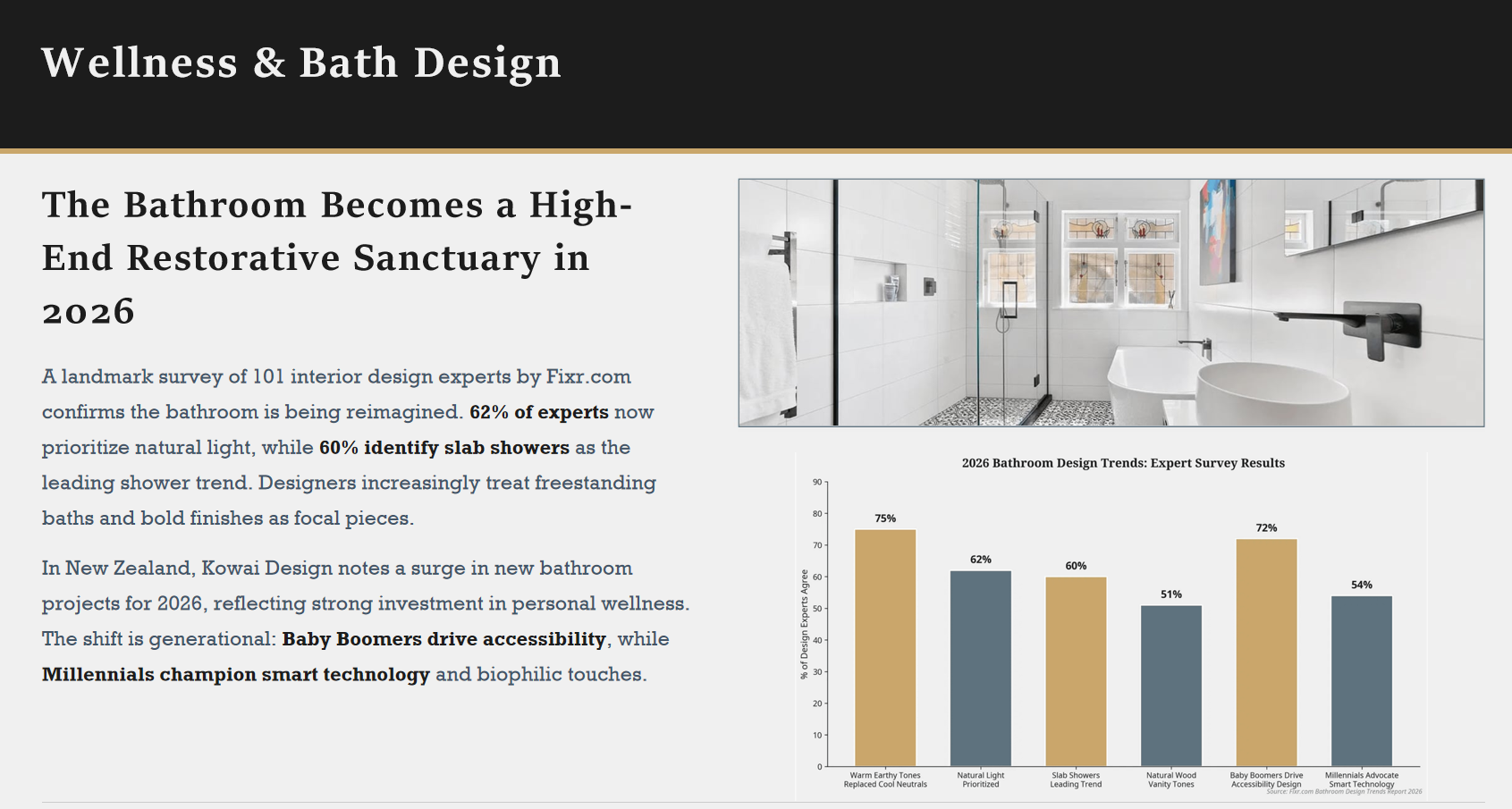
Consumer preferences in Oceania are moving toward more personalized and restorative environments.
Key characteristics include:
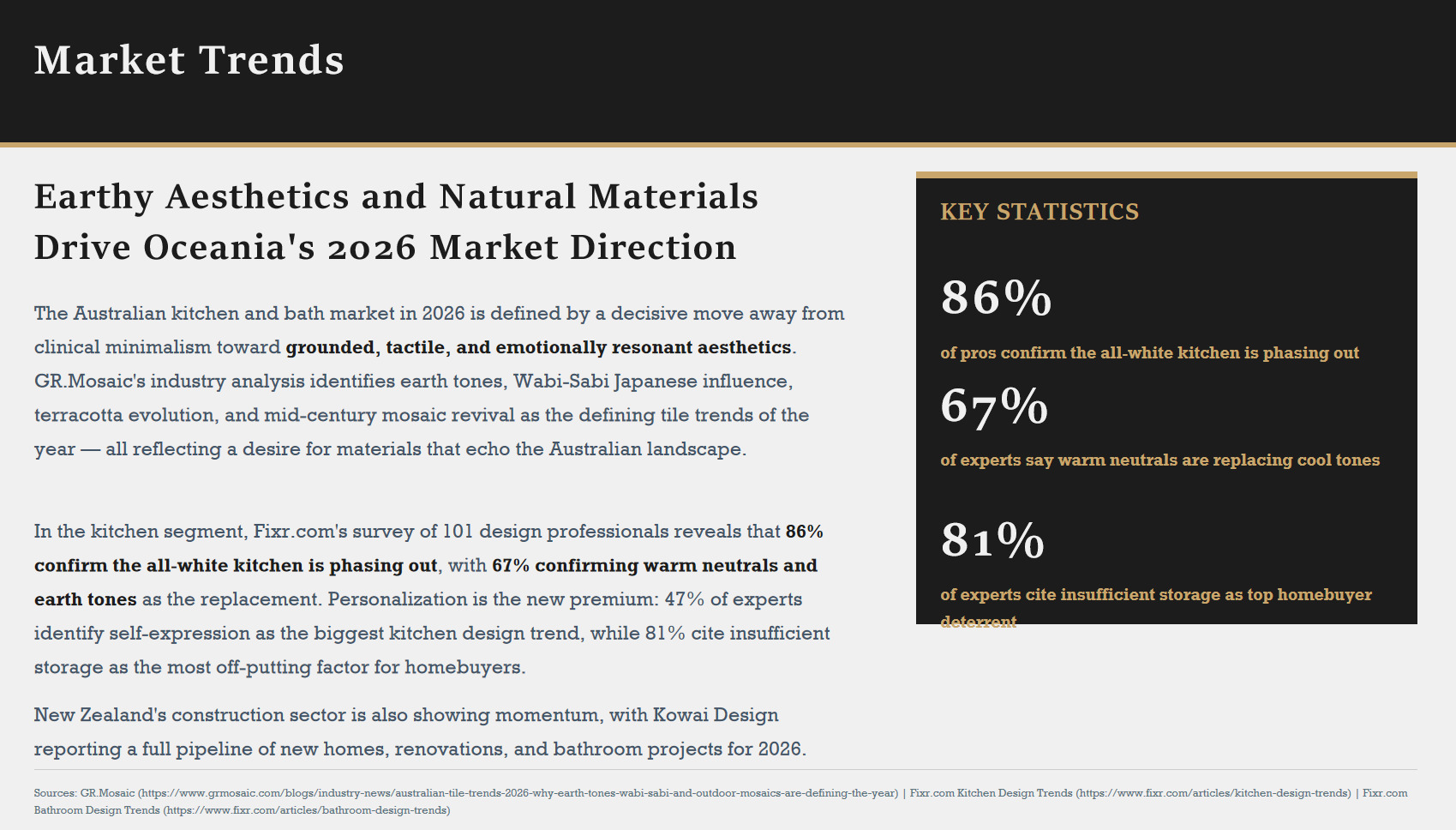
warm, earthy color palettes
natural materials such as stone and timber
increased emphasis on lighting and spatial comfort
Bathrooms are increasingly positioned as spaces for relaxation and recovery, influencing both product design and material selection.
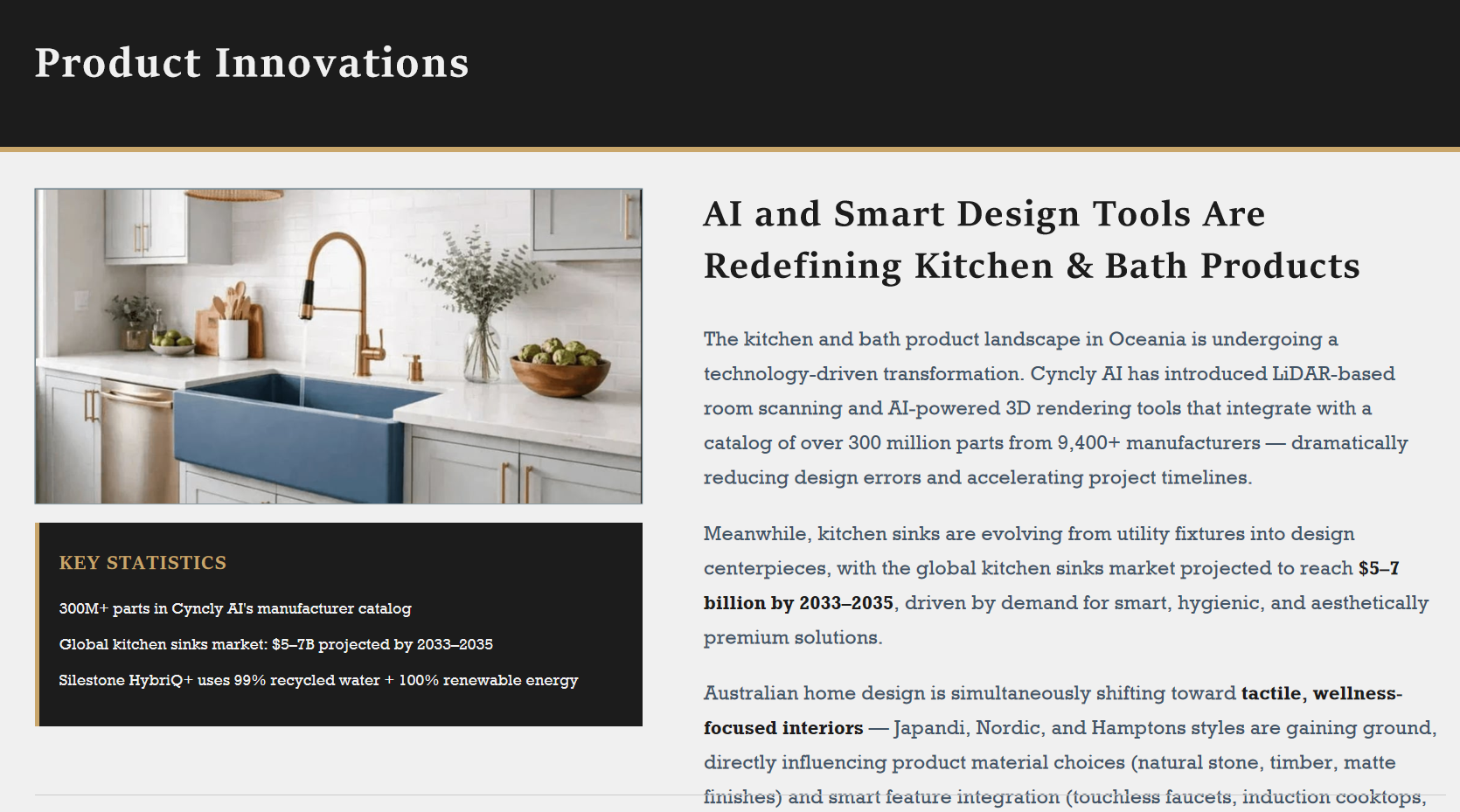
3. Digital Design Tools Are Shifting Market Entry Points
The integration of AI-driven design platforms, such as Cyncly, is changing how products enter the market.
Designers now:
work with large digital component libraries
simulate layouts before procurement
make product decisions earlier in the process
This means that visibility within design ecosystems is becoming as important as traditional distribution channels.
4. E-Commerce and Price Sensitivity Coexist
Oceania’s retail landscape is highly developed, with strong adoption of online purchasing and mobile-first behavior.
At the same time:
consumers are increasingly price-conscious
brand switching is common
flexible payment options are gaining traction
This creates a dual pressure:
products must deliver both perceived value and real performance.
5. The Delivery Gap: A Critical Constraint
Despite positive signals in building approvals, the construction sector continues to face:
labor shortages
project delays
capacity limitations
This “delivery gap” means that reliability in supply, lead time management, and communication are becoming critical competitive factors.
Conclusion
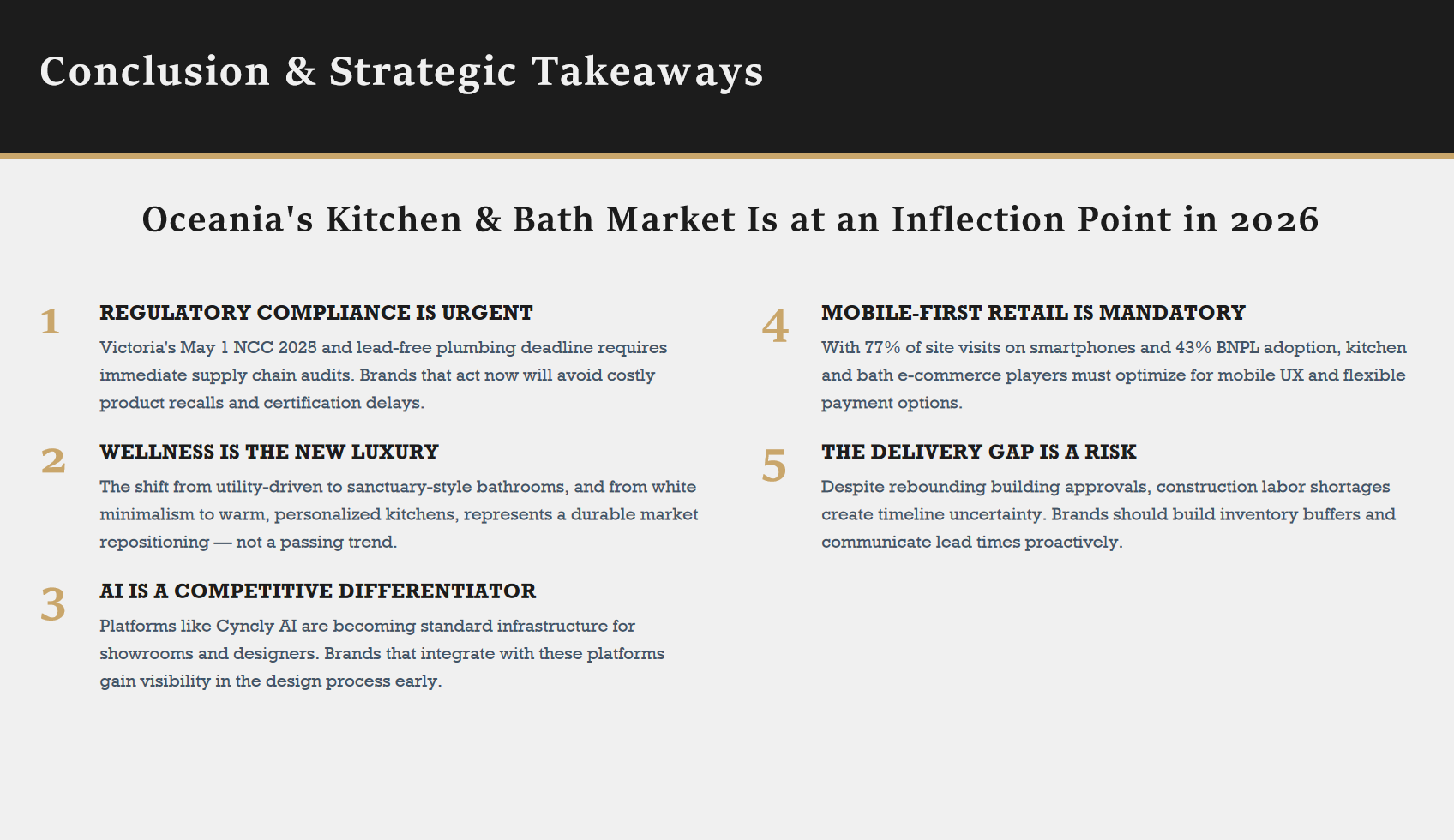
The Oceania kitchen and bath market is defined by a complex balance:
strict compliance requirements
evolving consumer expectations
operational constraints in execution
Success in this environment requires more than strong products.
It depends on the ability to:
meet regulatory standards with certainty
align with design and lifestyle trends
deliver consistently despite external pressures
In Oceania, competitive advantage lies in the intersection of product, process, and reliability.
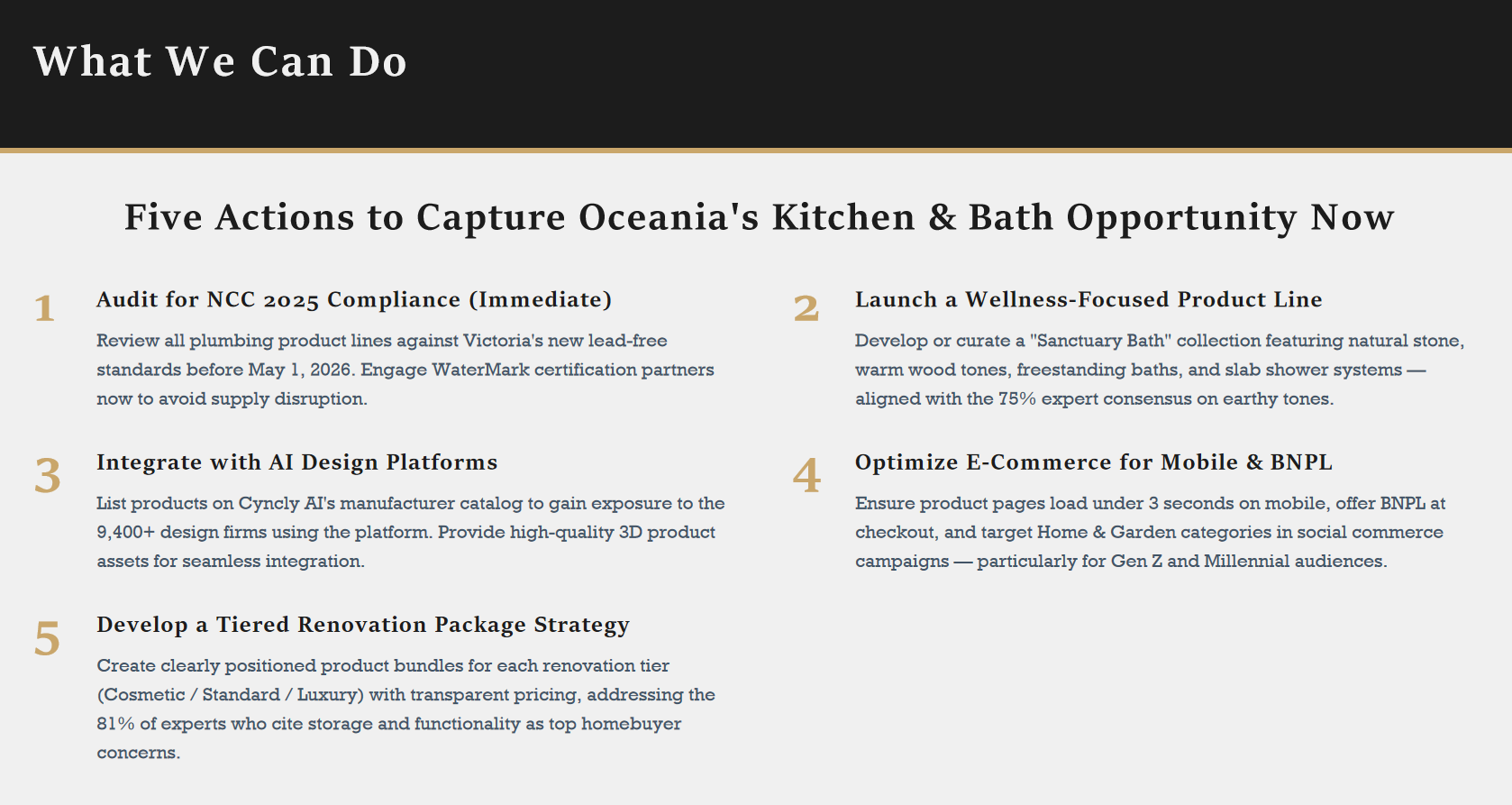
For companies operating in Oceania, aligning compliance, design relevance, and delivery capability will be key to long-term success.
#OceaniaMarket
#KitchenAndBath
#B2BManufacturing
#ConstructionIndustry
#SupplyChain
#ProductStrategy
#Ecommerce