
Product Knowledge Hub
Decisions, not product noise.
Practical guidance for buyers, specifiers and installers across shower enclosures, shower trays and bathtubs — built around fit, proof and operational risk.
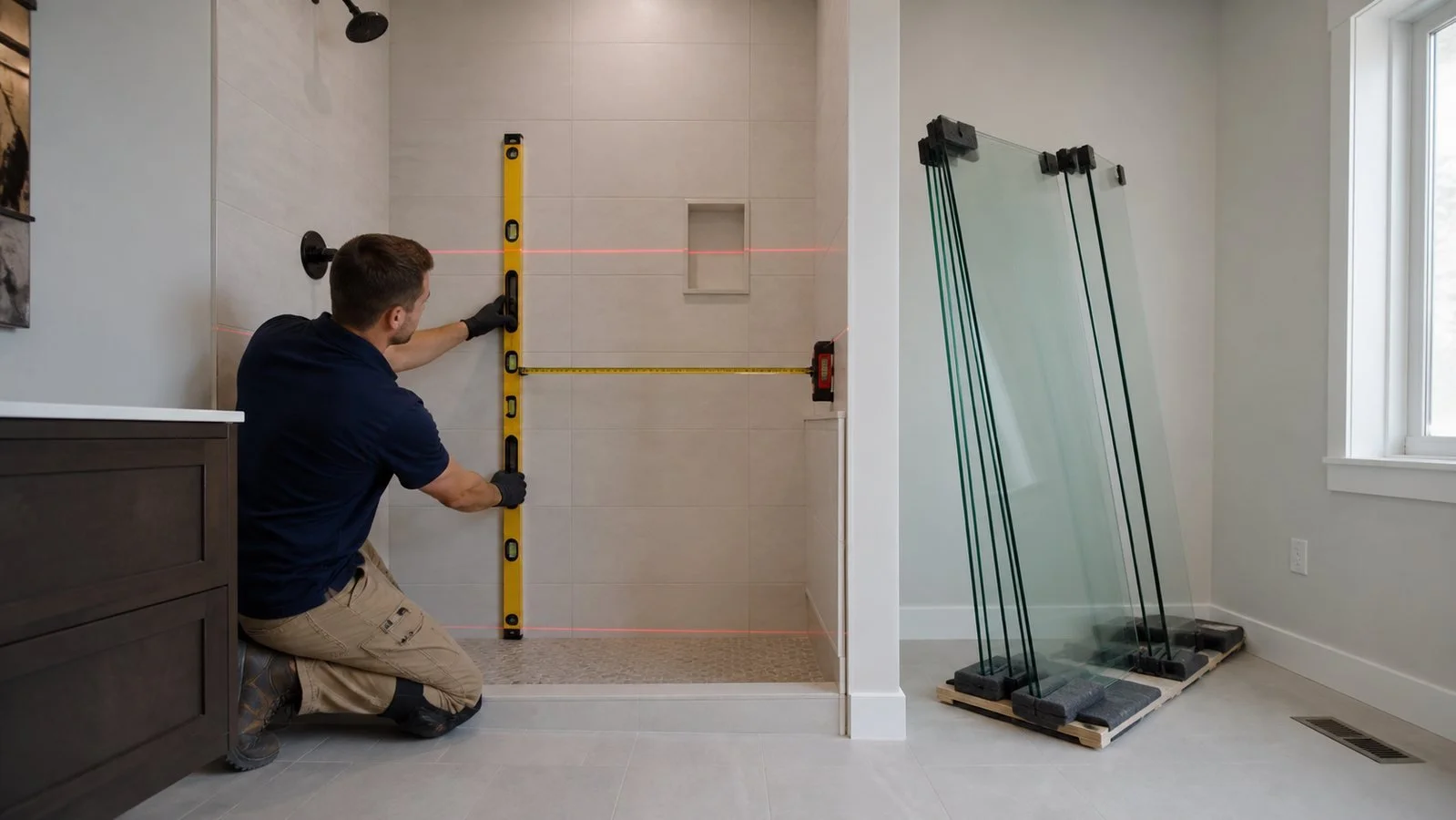
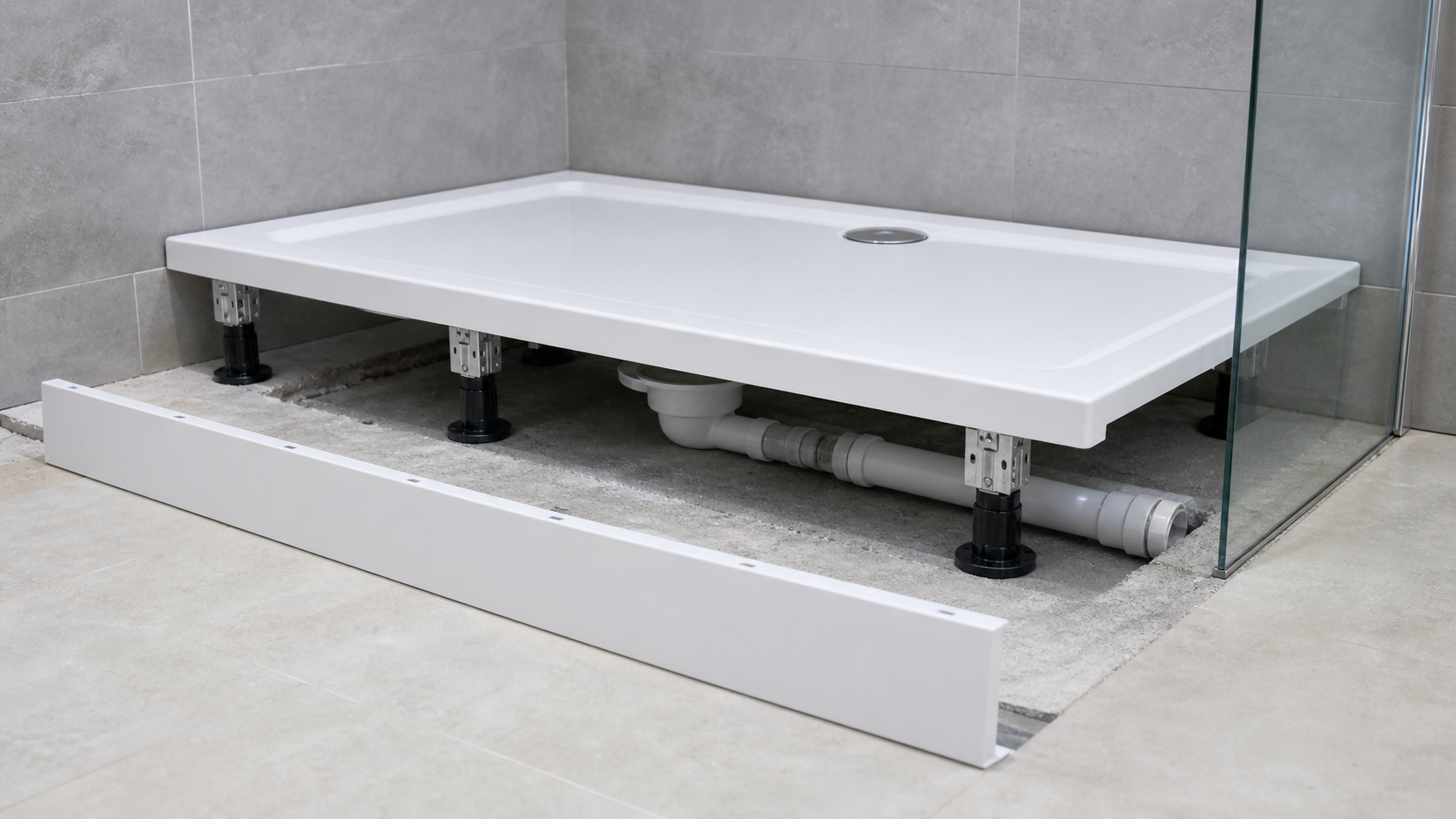

Three product paths
Start where the decision starts.
Product categories stay separate from decision themes. This keeps an enclosure, tray or bathtub article discoverable without burying readers in one mixed archive.
Featured entry points
Start fast. Search deeper.
These nine editorial picks remain useful for first-time readers. They are no longer presented as the complete library.
How to Specify a Shower Enclosure Beyond Glass Thickness
Compare shower enclosures as complete systems: geometry, adjustment, glass, profiles, hardware, water control, installation and service parts.
Shower Enclosure Water Containment Has Boundaries
Shower leakage claims depend on tray level, seals, profiles, silicone locations, showerhead position, threshold design and installation quality.
Build Shower Enclosure Packaging Around the Distribution Route
Define the shipping route, product vulnerabilities, pack design, test sequence and claim evidence before approving shower enclosure packaging.
How to Choose a Shower Tray That Fits the Enclosure
Size, shape, radius, handedness, glass landing area and finished-wall dimensions in one decision path.
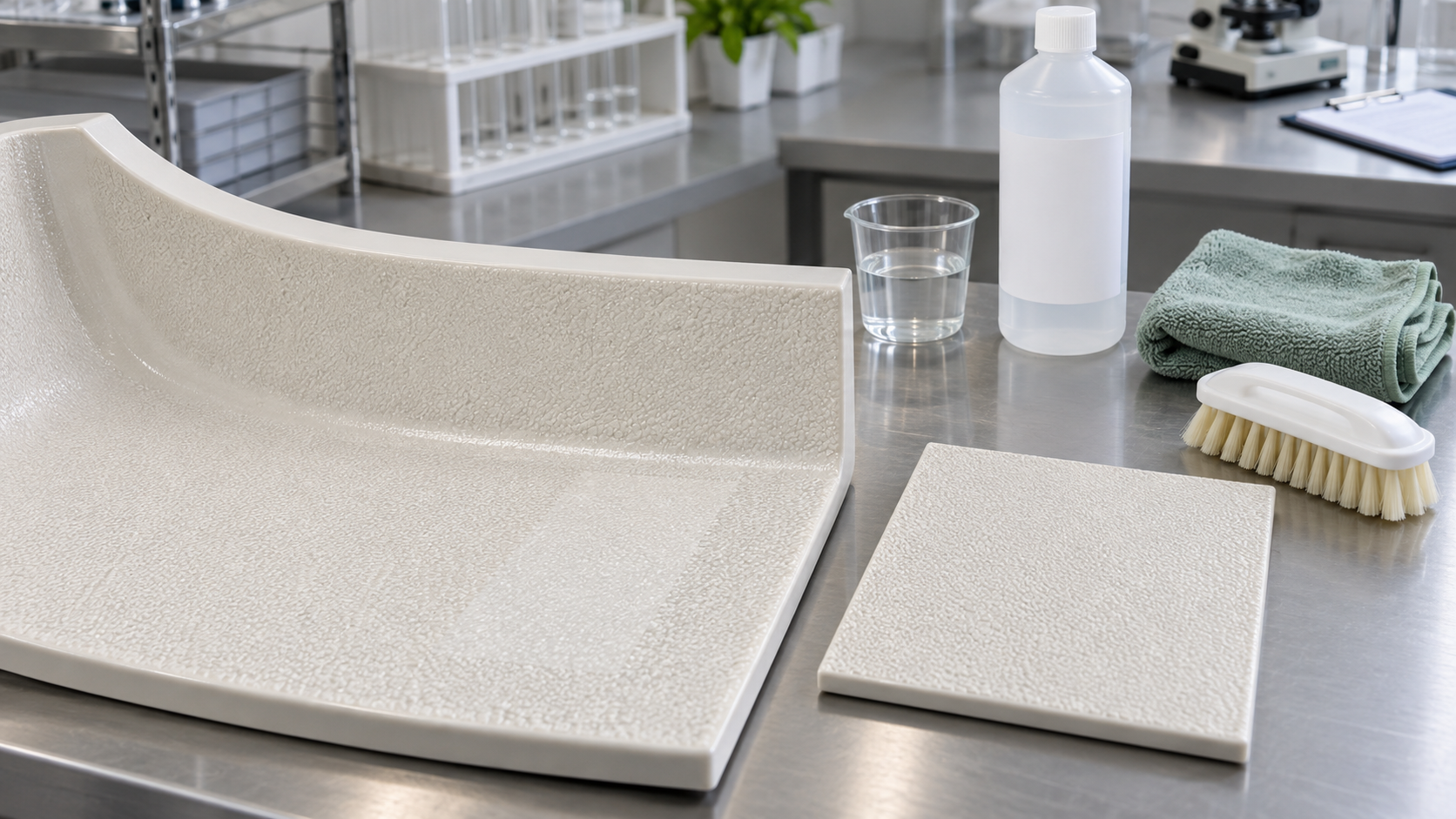
Textured Does Not Automatically Mean Anti-Slip
Learn how to assess textured shower tray slip claims by checking the method, wet condition, specimen, result, acceptance rule and report scope.
Can This Shower Tray Be Cut?
Before cutting a shower tray, confirm the permitted zone, method, edge treatment, drain clearance, support detail and warranty in writing first.
How to Choose a Bathtub Material for Retail and Project Ranges
Compare bathtub materials by construction, weight, finish, support, repair, packaging and evidence instead of relying on generic material rankings.
Bathtub Packaging Economics
Compare carton, plywood and stacking by container quantity, damage exposure, warehouse handling, evidence and landed risk—not pack price alone.
Textured Bathtub Surfaces: Specify Evidence, Not Adjectives
Define textured bathtub surface evidence with controlled cleaning, scratch, impact, colour and repair conditions instead of absolute marketing claims.
Full published library
Find the article you came for.
Search title, summary and tags, then narrow by product and decision. Drafts deliberately stay out of this public index until they are published.
No published guide matches this search and filter combination.
Search by a problem, product or decision. Combine product and decision filters to narrow the results.
From article to useful action
Choose the next step that matches the product.
Send finished dimensions, target market, material direction and installation context. We will identify the product interfaces that need evidence before selection or site closure.
Request technical support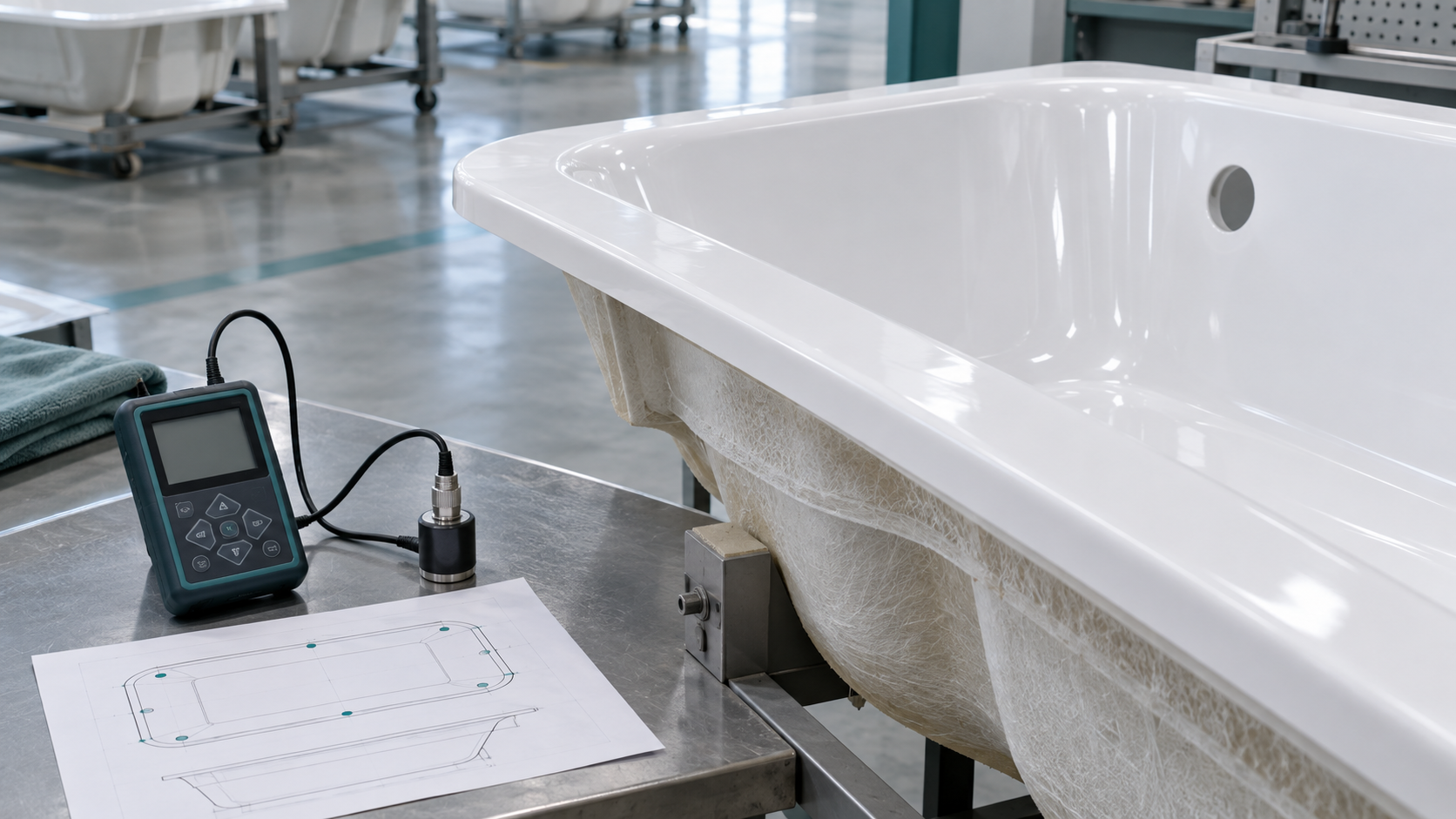
Acrylic Sheet Thickness Is Not Finished Bathtub Shell Thickness
A nominal acrylic sheet gauge is an incoming-material fact, not a minimum thickness for every point of the formed bath or proof of the finished support system.
Heat-Soak-Tested Shower Glass: What It Reduces—and What It Cannot Guarantee
Heat soaking can reduce residual NiS-related breakage risk, but it cannot replace safety-glazing compliance, edge quality, fabrication control or stress-free installation.
Broken Shower Glass Investigation: Preserve Fracture, Edge and Installation Evidence
Secure the area and preserve fragments, pane identity, edges, hardware, clearances and site geometry before assigning a cause or installing a replacement.
Walk-In Shower Screen Splash Control: Coordinate Screen, Outlet and Wet-Zone Geometry
Control walk-in splash by coordinating the outlet, user zone, panel, opening, fall, drainage, waterstop and waterproofed area—not by choosing one screen length.
Textured Shower Tray Wear Validation: Test Abrasion, Cleaning and Slip Retention Separately
Define realistic cleaning and wear conditioning, inspect texture and layer integrity, then repeat the applicable slip test instead of inferring retained performance from appearance.
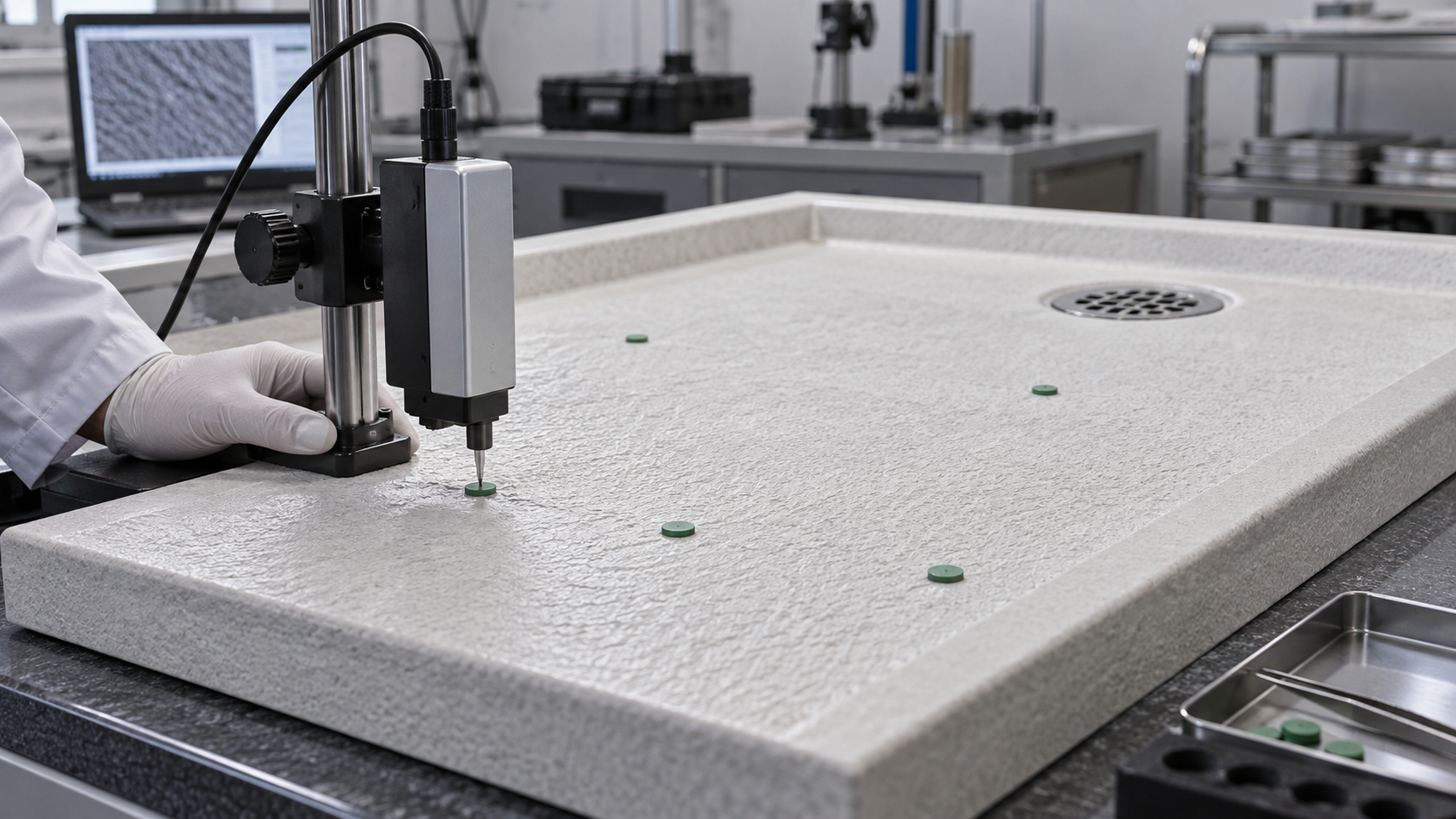
Shower Tray Roughness Is Not a Slip Rating
Use Ra, Rz or areal topography to control production only after the method is defined; use an applicable slip test for the user-safety claim.
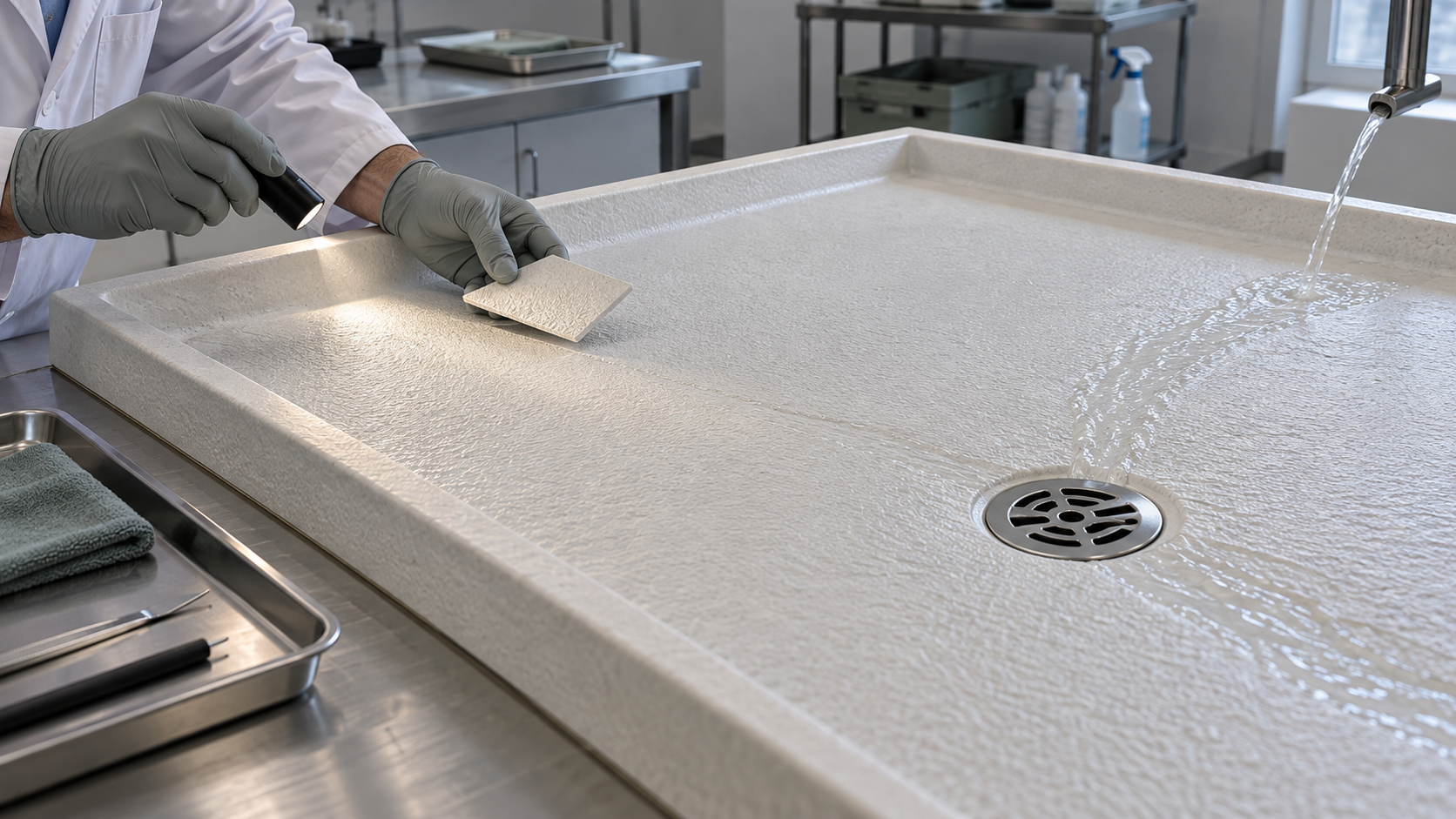
Textured Shower Tray Repair Approval: Recheck Colour, Texture, Drainage and Slip Claims
Release a textured-tray repair only after the exact approved system is followed and the affected appearance, drainage, cleaning, adhesion and slip claims are rechecked.

Bathtub First-Article Inspection: Check Dimensions, Support, Waste and Surface Before Production
Check bathtub identity, drawing datums, dimensions, support, waste and overflow, surface, packaging and evidence before releasing mass production.

OEM Bathtub Drawing Approval: Define Critical-to-Fit Dimensions Before Tooling
Define bathtub datums, critical dimensions, interfaces, tolerances, revisions and approval owners before tooling, sampling or mass production.

How to Compare Bathtub Quotations: Normalize Shell, Support, Waste, Packaging and Warranty
Compare bathtub quotations by construction, support, waste, overflow, accessories, packaging, delivery and warranty—not headline unit price alone.

From Test Report to Buyer-Approved Product Claim: A Technical-to-Sales Release Workflow
Turn bathroom-product test evidence into accurate sales claims by controlling scope, sample identity, method, market, wording, revision and approval.

Landed Cost Is Not Unit Price: Build a Procurement-to-Finance Risk Model for Bathroom Products
Compare shower tray, enclosure and bathtub offers with a landed-cost model covering scope, freight, customs, handling, damage, service and assumptions.
Textured Bathtub Cleaning Validation: Test Chemistry, Contact Time and Repetition
Turn “easy to clean” into a reproducible protocol covering soil, chemistry, dilution, dwell, tool, rinse, repetition and post-dry surface assessment.

Textured Bathtub Batch Approval: Control Pattern, Colour, Gloss and Join Lines
Release textured bathtub batches with a full-size master, limit samples, fixed lighting and change control—not one colour number or phone photo.
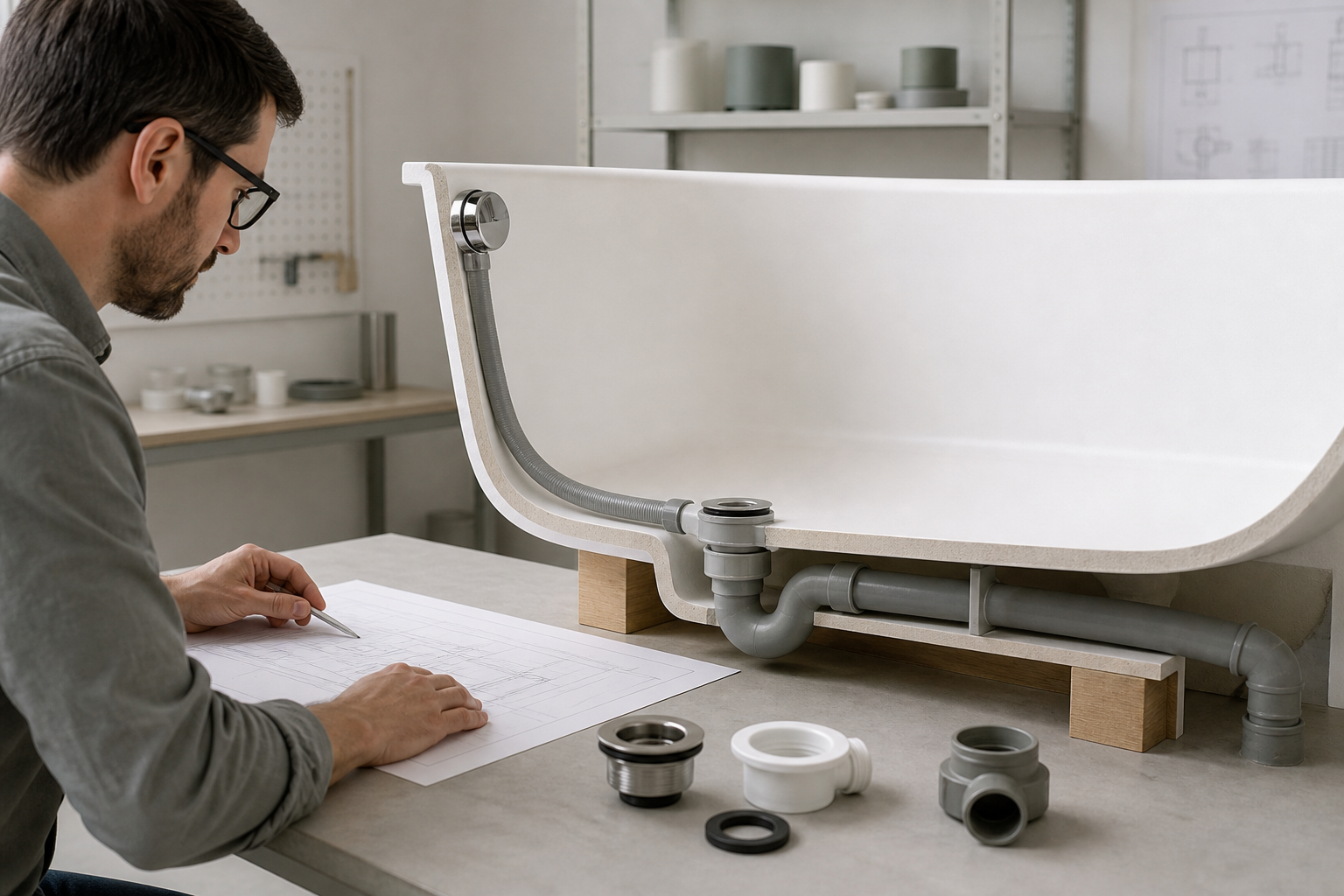
Textured Bathtub Functional Zones: Control Waste, Overflow, Rim and Tap Interfaces
Keep decorative texture from compromising waste, overflow, tap, screen, rim-seal and support interfaces by controlling every functional zone on the drawing.

Textured Bathtub Exterior vs Interior: Specify Each Surface Separately
A textured bathtub has multiple surface zones. Define exterior, bathing floor, rim and service interfaces separately, then request evidence for each claim.
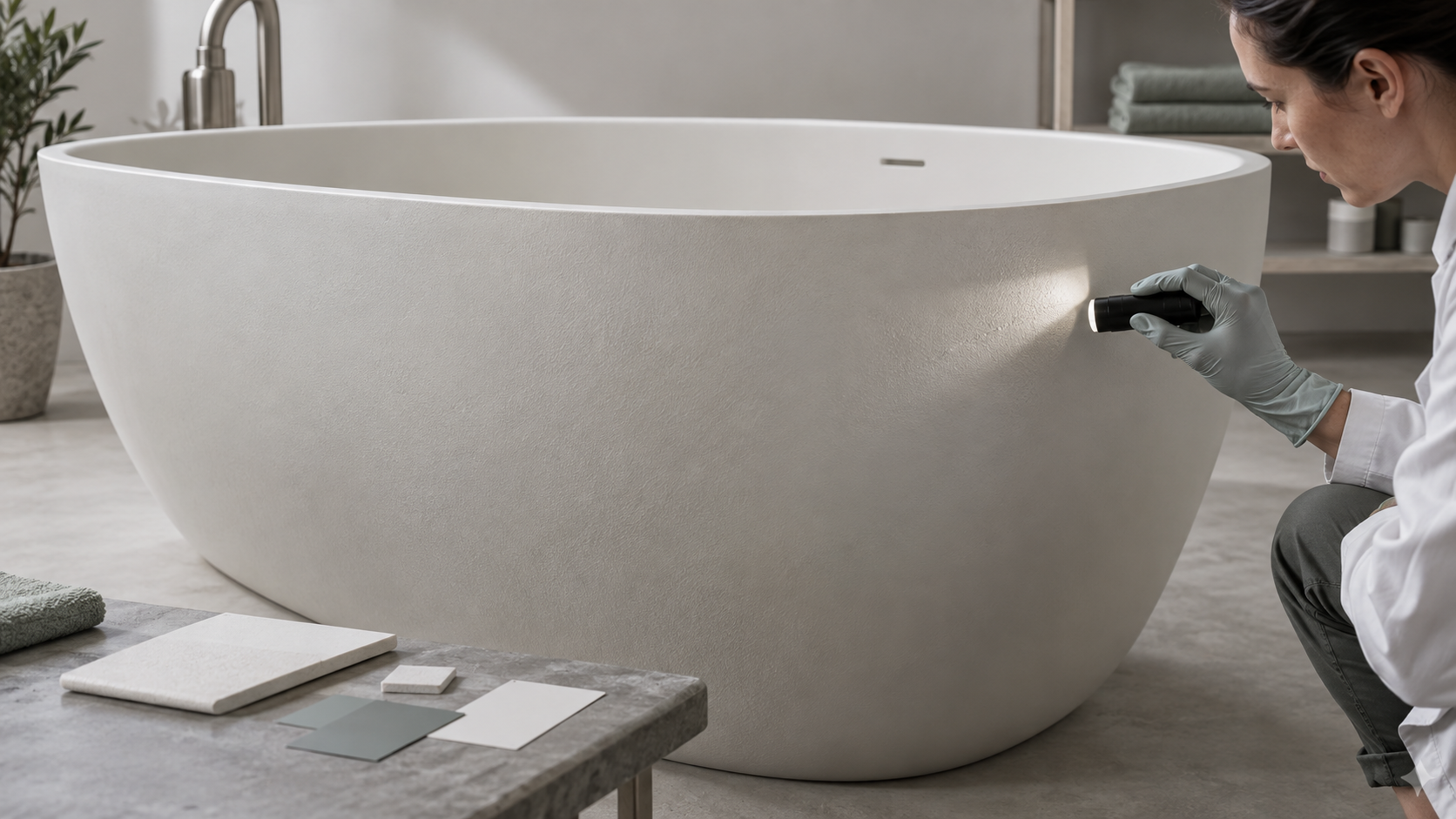
Textured Bathtub Repair Approval: Match Colour, Gloss and Pattern Before Release
Release a textured bathtub repair only after damage depth, approved chemistry, colour, sheen, pattern, water exposure and affected functional claims are checked separately.
Textured Bathtub Mould Seams and Radius Transitions: Separate Appearance From Structure
A visible line may be a mould witness, shell join, finish transition, rework or crack. Draw the expected line, then inspect structure, water exposure and appearance in that order.
Bathtub Size Is Not Bathing Depth: Compare Usable Geometry
Compare internal depth, waterline, capacity definition, floor length and backrest—not external height alone.
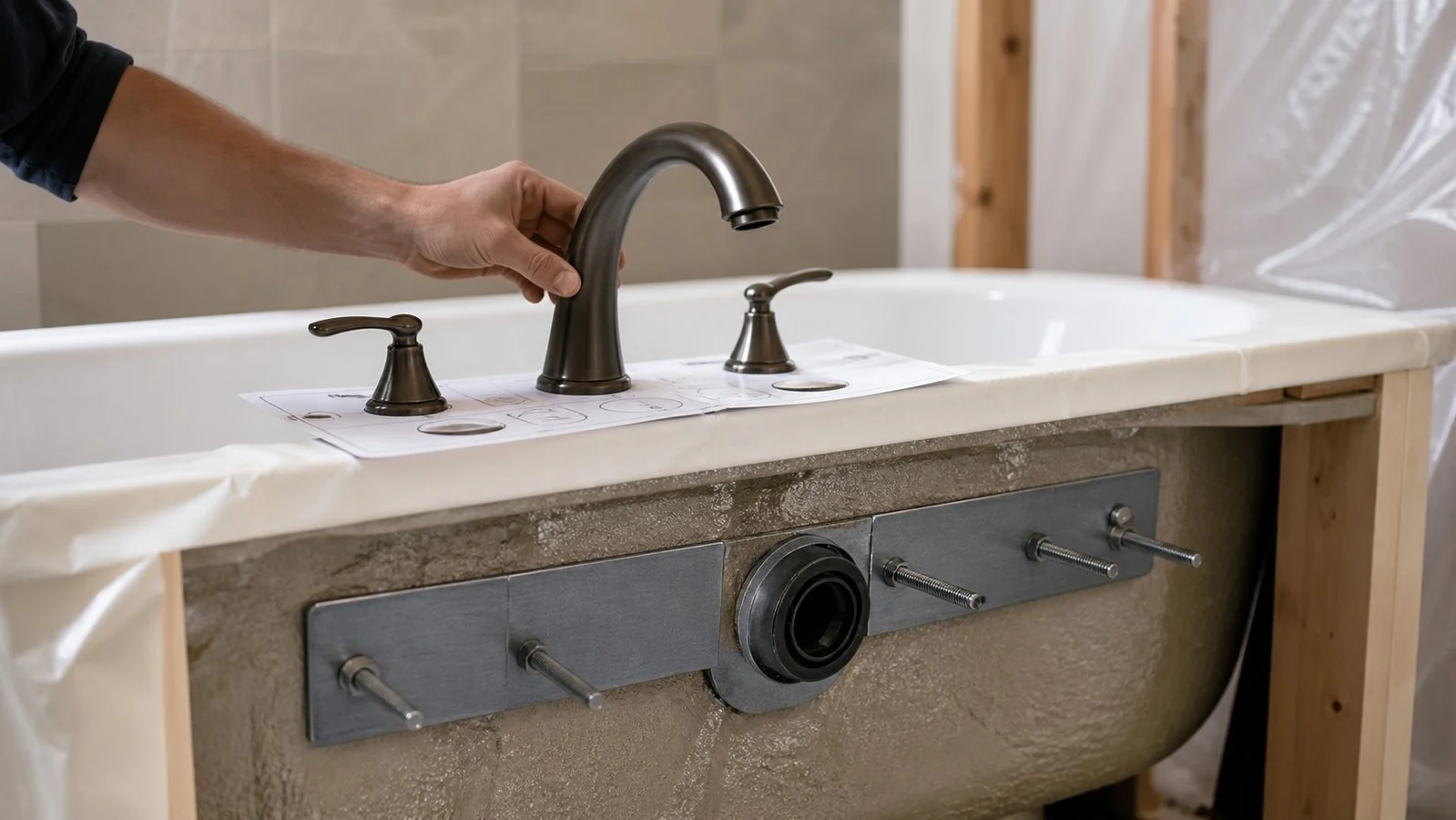
Before Drilling Bathtub Tap Holes: Check the Full Interface
Check approved drill zones, rim reinforcement, spout reach, overflow conflicts and service access before cutting a bath.