Product Knowledge Hub
Decisions, not product noise.
Practical guidance for buyers, specifiers and installers across shower enclosures, shower trays and bathtubs — built around fit, proof and operational risk.
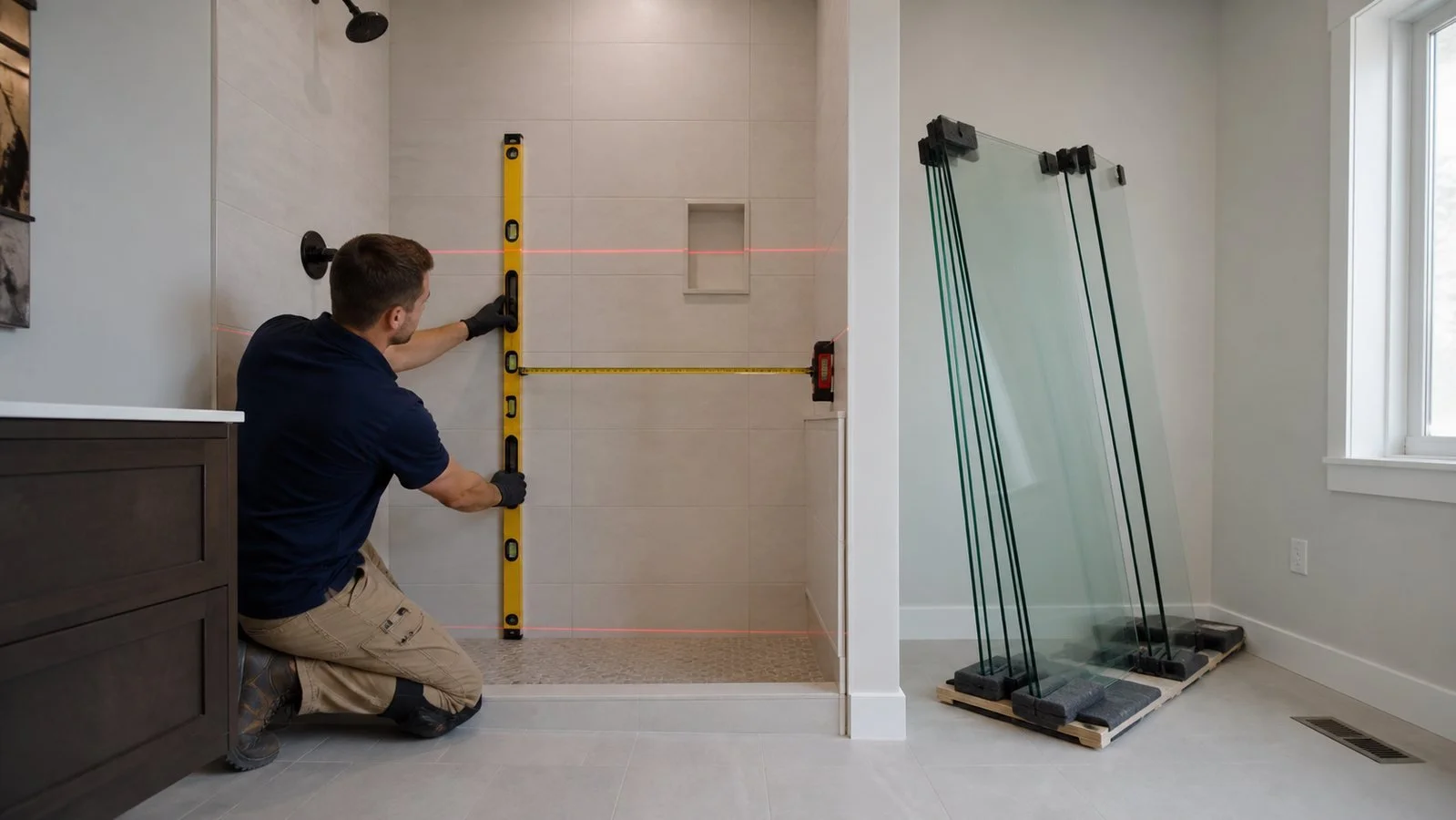
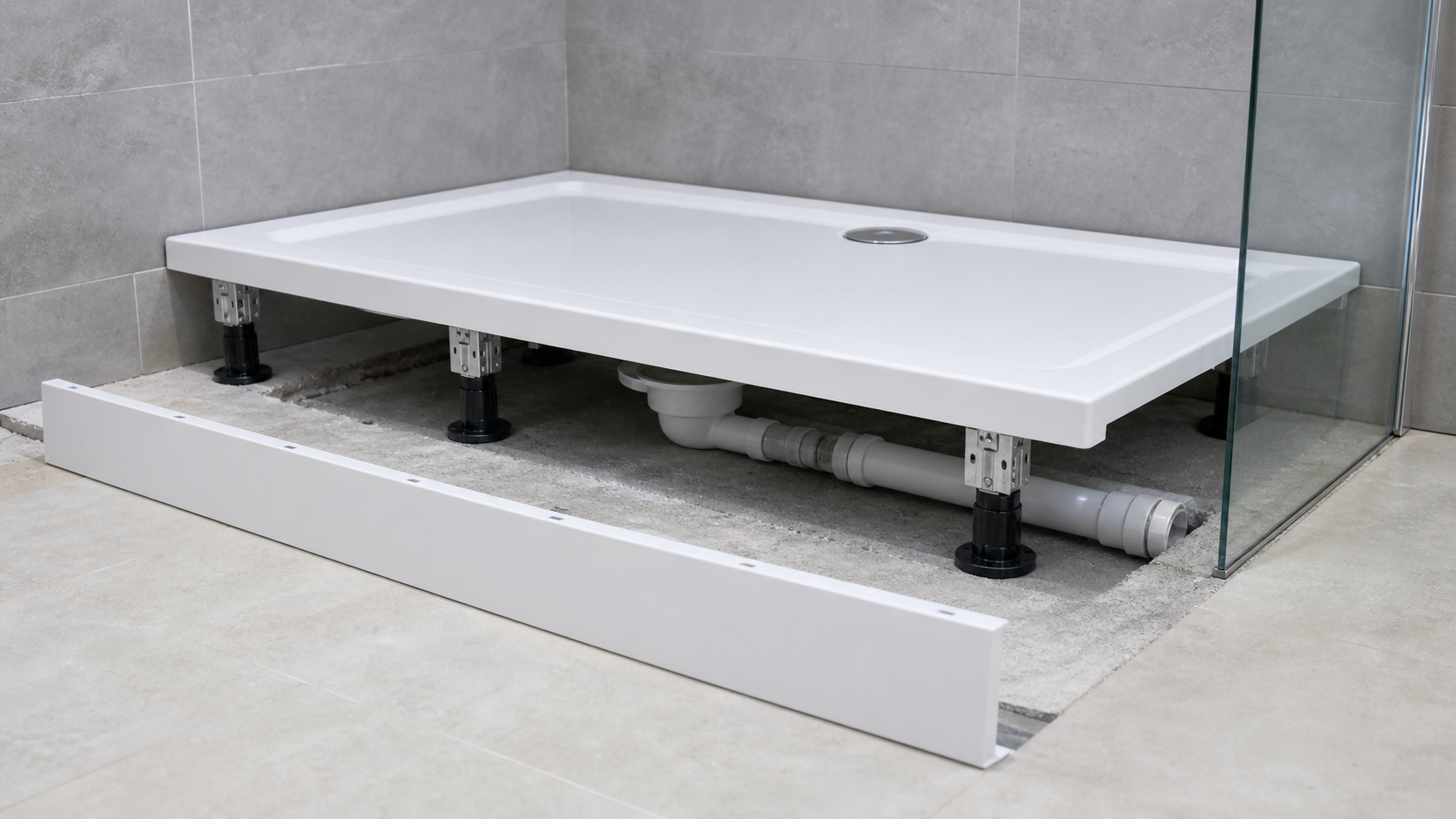

Three product paths
Start where the decision starts.
Product categories stay separate from decision themes. This keeps an enclosure, tray or bathtub article discoverable without burying readers in one mixed archive.
Featured entry points
Start fast. Search deeper.
These nine editorial picks remain useful for first-time readers. They are no longer presented as the complete library.
How to Specify a Shower Enclosure Beyond Glass Thickness
Compare shower enclosures as complete systems: geometry, adjustment, glass, profiles, hardware, water control, installation and service parts.
Shower Enclosure Water Containment Has Boundaries
Shower leakage claims depend on tray level, seals, profiles, silicone locations, showerhead position, threshold design and installation quality.
Build Shower Enclosure Packaging Around the Distribution Route
Define the shipping route, product vulnerabilities, pack design, test sequence and claim evidence before approving shower enclosure packaging.
How to Choose a Shower Tray That Fits the Enclosure
Size, shape, radius, handedness, glass landing area and finished-wall dimensions in one decision path.
Textured Does Not Automatically Mean Anti-Slip
Learn how to assess textured shower tray slip claims by checking the method, wet condition, specimen, result, acceptance rule and report scope.
Can This Shower Tray Be Cut?
Before cutting a shower tray, confirm the permitted zone, method, edge treatment, drain clearance, support detail and warranty in writing first.
How to Choose a Bathtub Material for Retail and Project Ranges
Compare bathtub materials by construction, weight, finish, support, repair, packaging and evidence instead of relying on generic material rankings.
Bathtub Packaging Economics
Compare carton, plywood and stacking by container quantity, damage exposure, warehouse handling, evidence and landed risk—not pack price alone.
Textured Bathtub Surfaces: Specify Evidence, Not Adjectives
Define textured bathtub surface evidence with controlled cleaning, scratch, impact, colour and repair conditions instead of absolute marketing claims.
Full published library
Find the article you came for.
Search title, summary and tags, then narrow by product and decision. Drafts deliberately stay out of this public index until they are published.
No published guide matches this search and filter combination.
Search by a problem, product or decision. Combine product and decision filters to narrow the results.
From article to useful action
Choose the next step that matches the product.
Send finished dimensions, target market, material direction and installation context. We will identify the product interfaces that need evidence before selection or site closure.
Request technical support
Why Shower Trays Deform in Storage: Self-Weight, Support Span and Time
Understand how self-weight, unsupported spans, point loads, time and temperature can contribute to shower tray deformation and what evidence buyers should require.
Raised Shower Tray Installation: Coordinate Legs, Panel and Waste Access
Treat a raised shower tray as one model-specific system of legs, floor fixings, drainage, panel and service access.

Large Shower Tray Handling: Dry-Fit the Route Before Lifting
Plan the handling envelope, team positions, set-down points and final support for a large tray before unpacking it.

How to Compare Lightweight Shower Trays: Use kg/m², Not Marketing Labels
Compare shower tray weight fairly by normalising kg per square metre, then checking support, packaging, handling and installation evidence together.

Low-Profile Shower Tray Over Joists: Coordinate the Opening Before Cutting
Coordinate a low-profile shower tray, joists, waste opening and access zone before cutting, with structural and model-specific approval kept separate.

Shower Tray Waste Access After Installation: Four Service Strategies
Plan shower-tray waste access before closure using four service strategies, with clear testing, handover and model-specific installation boundaries.
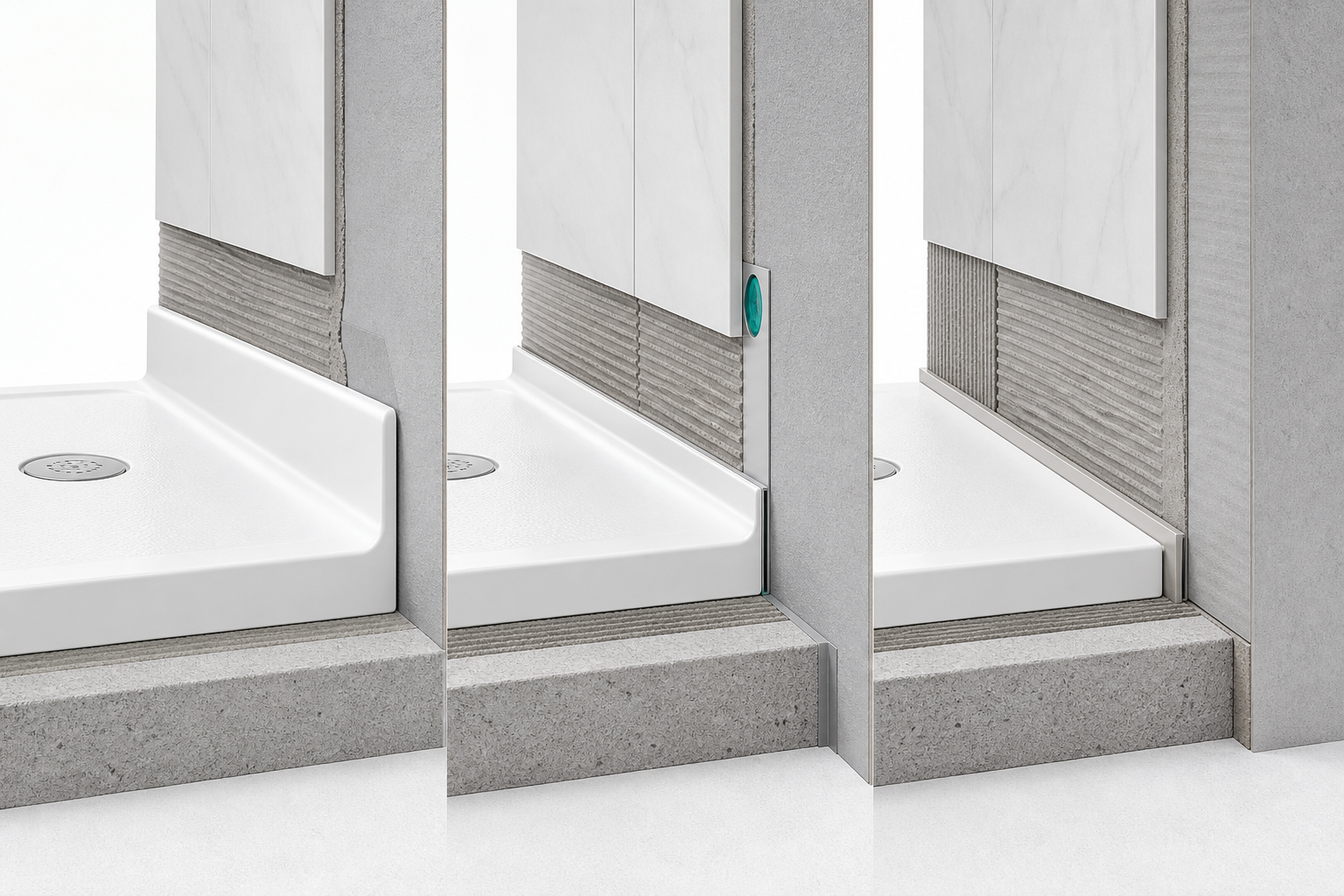
Shower Tray–Wall Junction: Upstand, Sealing Strip or Flat Edge?
Compare upstand, sealing-strip and flat-edge tray-to-wall details, then coordinate the selected tray, waterproofing system and wall finish before closure.
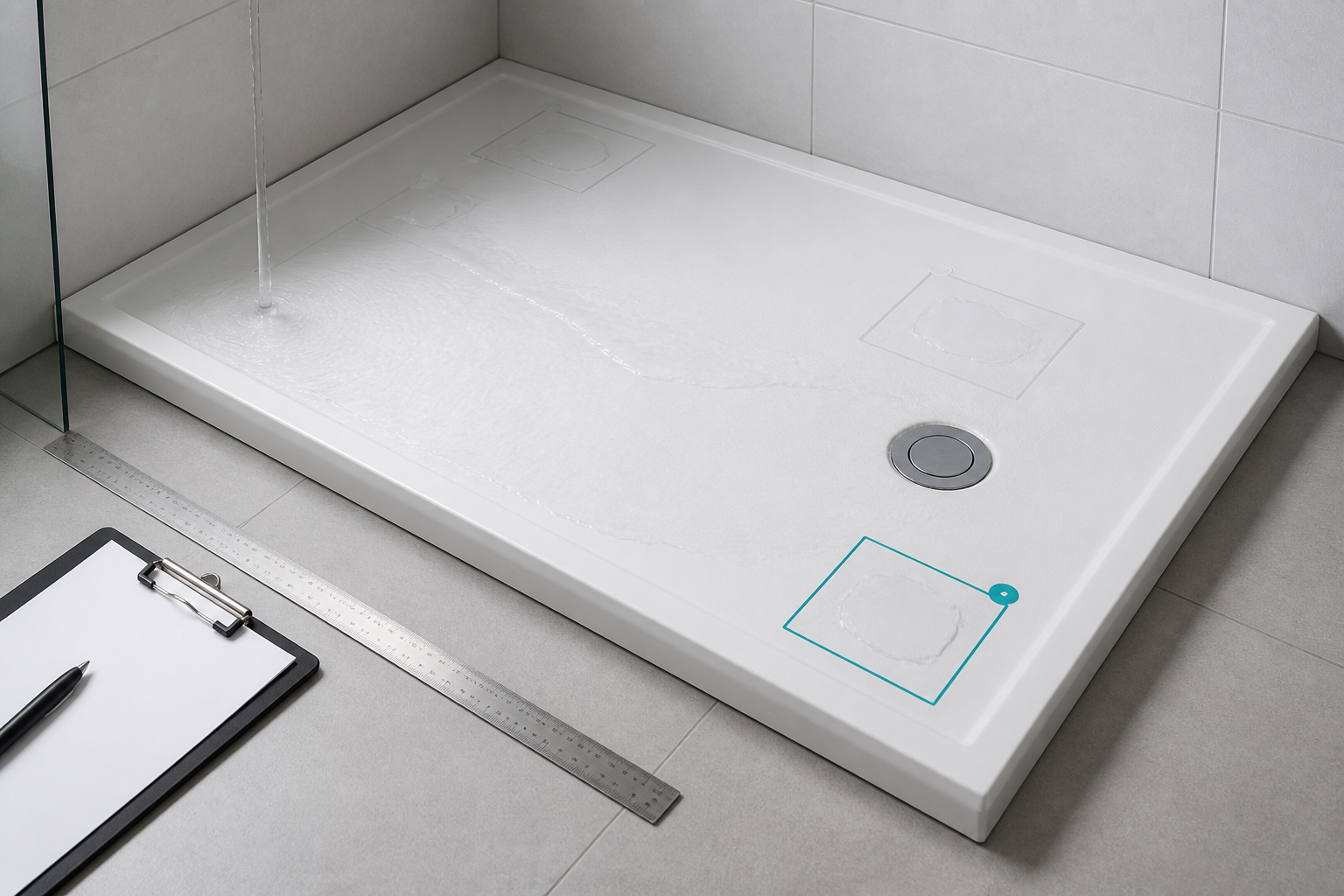
Shower Tray Water-Flow Test: Record Ponding Without Inventing a Universal Time Limit
A practical field method for recording ponding and separating tray level, waste performance and installation causes—without inventing a universal drain-time limit.
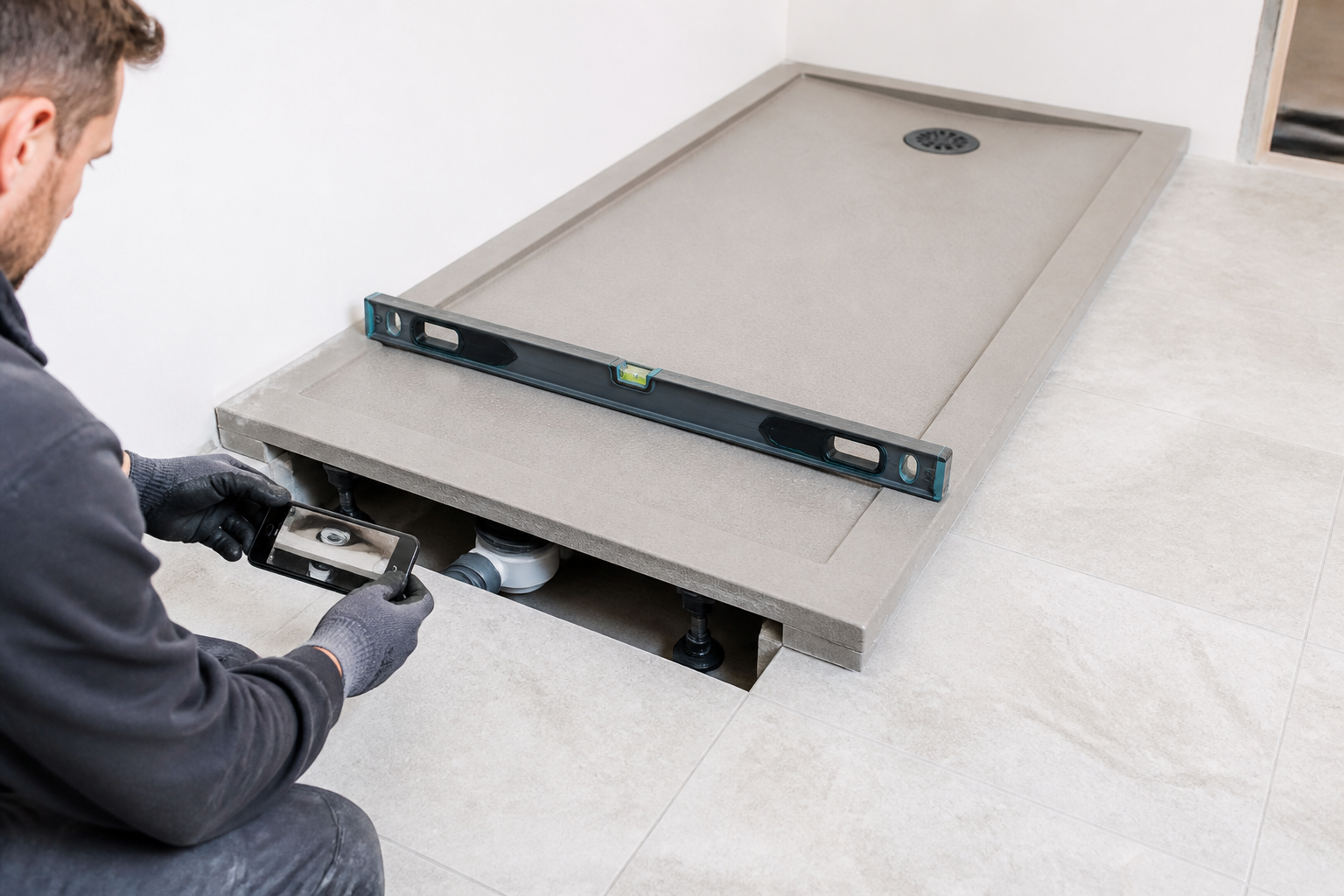
Shower Tray Troubleshooting: Movement, Slow Drainage or Surface Marks
A controlled first-response guide to shower tray movement, slow drainage, water leakage and surface marks—designed to preserve evidence before repair.
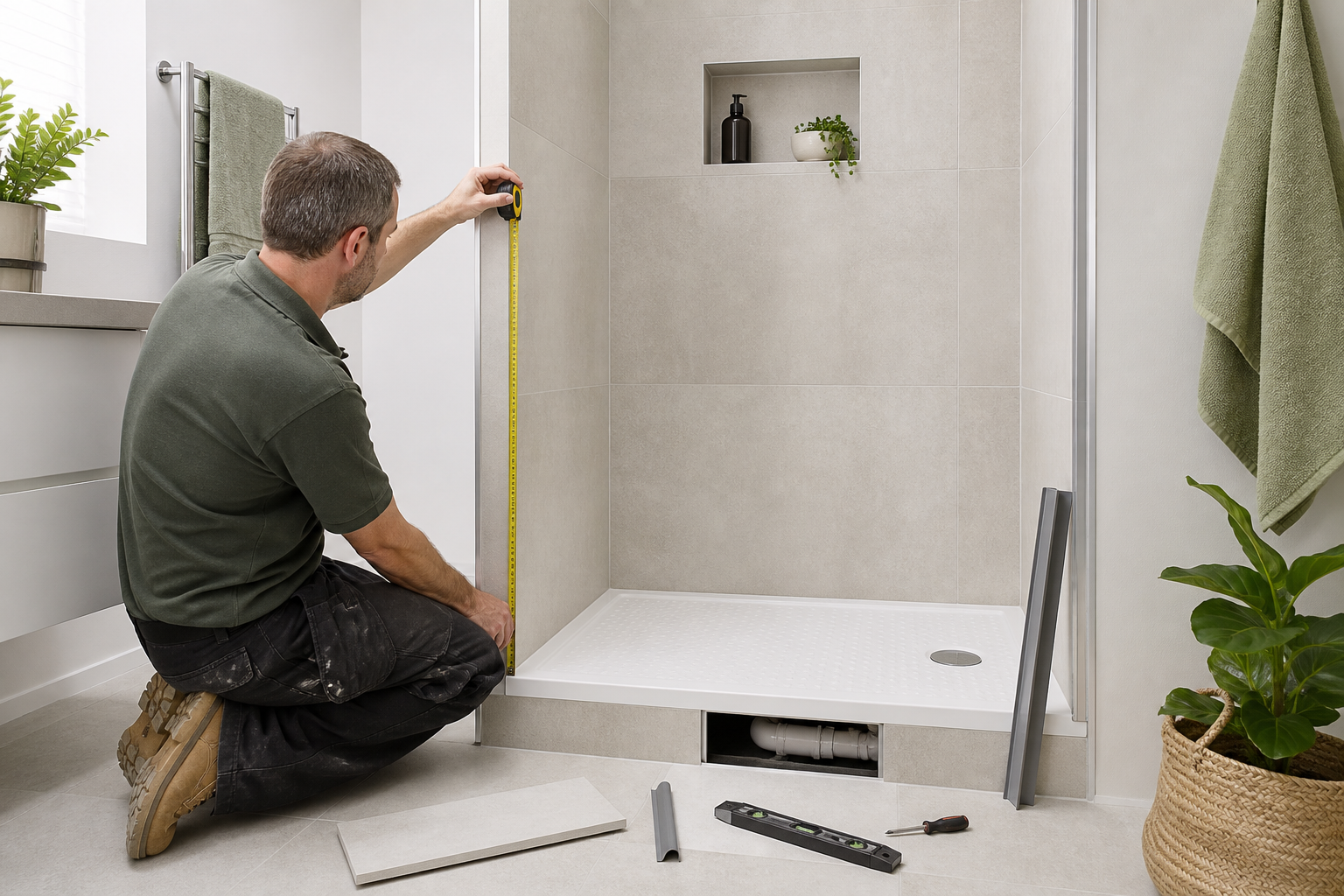
Two Shower Tray Problems Found Too Late: A Micro Case Review
Two reconstructed shower tray cases show how a finished-opening mismatch and a concealed waste problem should be diagnosed from interface evidence, not assumptions.

What Does “Repairable Shower Tray” Actually Mean?
Learn how to distinguish cleaning, cosmetic repair, full refinishing, structural damage and replacement before approving a shower tray repair.
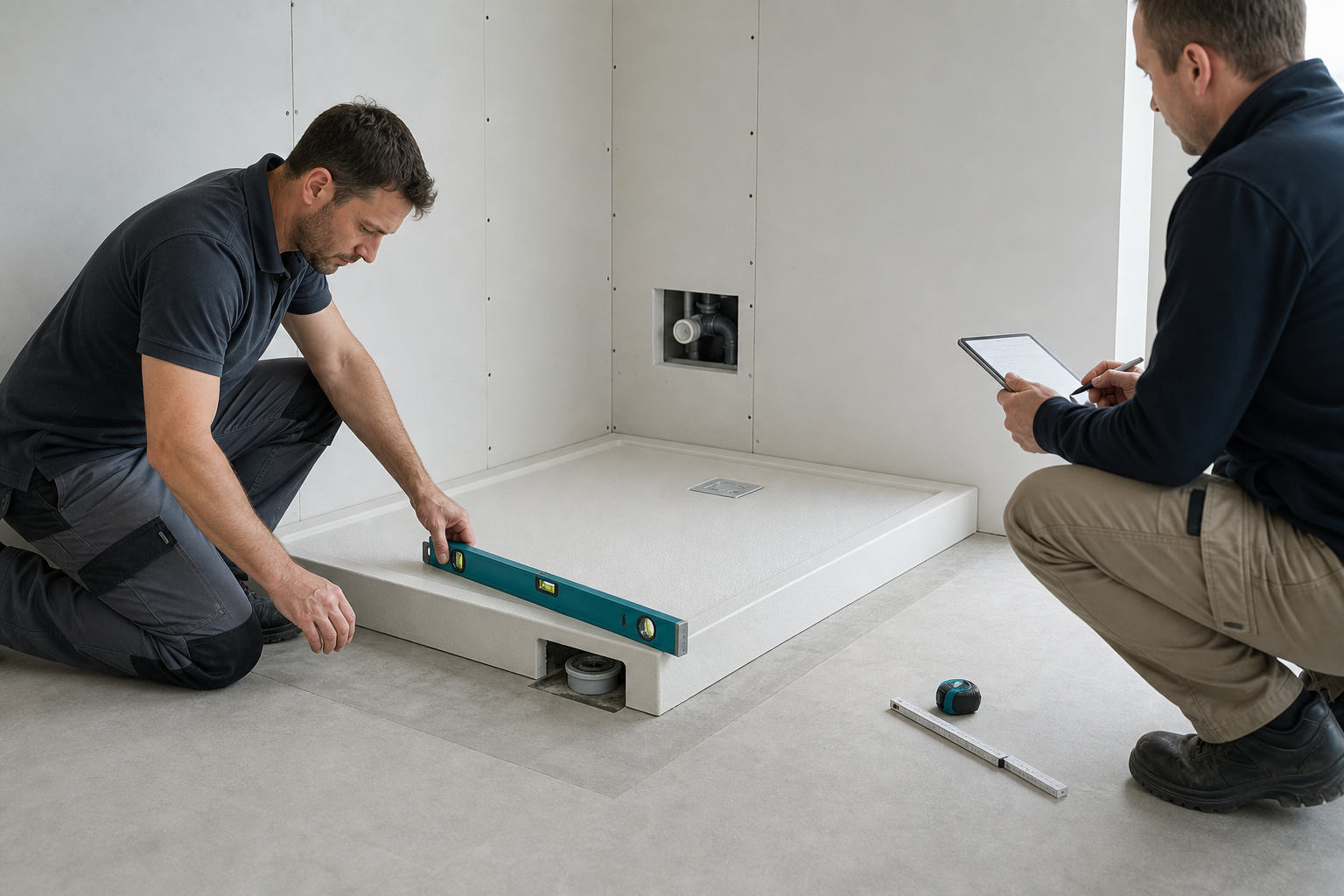
Shower Tray Installation Checklist Before Tiling and Enclosure Fitting
Eight hold points to verify the shower tray, support, waste, waterproofing and handover evidence before tiling or enclosure fitting hides the work.

Shower Tray vs Shower Base vs Wet-Room Former
“Shower tray,” “shower base” and “wet-room former” can describe different systems. Compare the finished surface, waterproofing, drain and support before specifying.

Shower Tray Support Is Model-Specific
Shower tray support depends on the exact model, substrate and waste interface. Use this six-check framework before bedding, bonding or framing begins.